Skip to content
Welcome To Our Store.
100,000+ Products for Home, Medical, Office & Classroom Needs
Search
Skip to product information
1 of 1

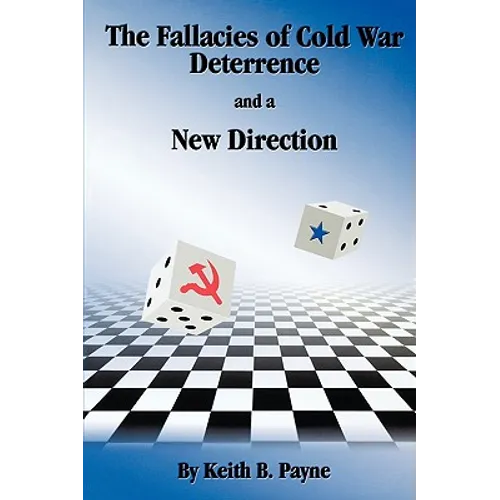
The Fallacies of Cold War Deterrence and a New Direction - Paperback

$42.75 USD
$42.75 USD
Sale Sold out
Shipping calculated at checkout.
In stock (100 units), ready to be shipped

Available Offers

Fast delivery available on most orders

Multiple secure payment options accepted

Secure checkout with
  • American Express
  • Apple Pay
  • Diners Club
  • Discover
  • Google Pay
  • Mastercard
  • PayPal
  • Shop Pay
  • Visa

Flight Range: Up to 1,000 meters (3,280 feet)

Maximum Speed: 45 kilometers per hour (28 miles per hour)

For all orders exceeding a value of 100USD shipping is offered for free.

Returns will be accepted for up to 10 days of Customer’s receipt or tracking number on unworn items. You, as a Customer, are obliged to inform us via email before you return the item.

Otherwise, standard shipping charges apply. Check out our delivery Terms & Conditions for more details.

View Product Details
Shopping cart
Product Product subtotal Quantity Price Product subtotal
The Fallacies of Cold War Deterrence and a New Direction - Paperback
$42.75/ea
$0.00
$42.75/ea $0.00

Product Description

by Keith B. Payne (Author)

In 1938, Prime Minister Neville Chamberlain hoped that a policy of appeasement would satisfy Adolf Hitler's territorial appetite and structured British policy accordingly. This plan was a failure, chiefly because Hitler was not a statesman who would ultimately conform to familiar norms. Chamberlain's policy was doomed because he had greatly misjudged Hitler's basic beliefs and thus his behavior. U.S. Cold War nuclear deterrence policy was similarly based on the confident but questionable assumption that Soviet leaders would be rational by Washington's standards; they would behave reasonably when presented with nuclear threats. The United States assumed that any sane challenger would be deterred from severe provocations because not to do so would be foolish. Keith B. Payne addresses the question of whether this line of reasoning is adequate for the post-Cold War period. By analyzing past situations and a plausible future scenario, a U.S.-Chinese crisis over Taiwan, he proposes that American policymakers move away from the assumption that all our opponents are comfortably predictable by the standards of our own culture. In order to avoid unexpected and possibly disastrous failures of deterrence, he argues, we should closely examine particular opponents' culture and beliefs in order to better anticipate their likely responses to U.S. deterrence threats.


Number of Pages: 242
Dimensions: 0.72 x 9.16 x 6.02 IN
Publication Date: July 20, 2001
you might like
