Product Description
by Brent Dawson (Author)
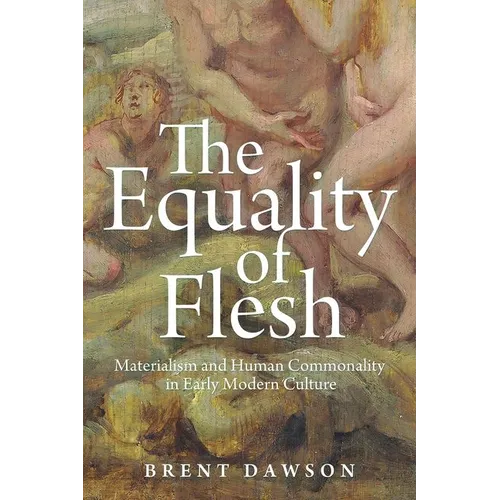
The Equality of Flesh traces a new genealogy of equality before its formalization under liberalism. While modern ideas of equality are defined through an inner human nature, Brent Dawson argues that the sixteenth and seventeenth centuries conceptualized equality as an ambivalent and profoundly bodily condition. Everyone was made from the same lowly matter and, as a result, shared the same set of vulnerabilities, needs, and passions. Responding to the political upheavals of colonialism and the intellectual turmoil of new natural philosophies, leading figures of the English Renaissance, including Edmund Spenser and William Shakespeare, anxiously imagined that bodily commonality might undermine differences of religion, race, and class.
As the period progressed, later authors developed the revolutionary possibilities of bodily equality even as new ideas of fixed racial inequality emerged. Some--like the utopian radical Gerrard Winstanley and the republican poet John Milton--challenged political absolutism through the idea of humans as base, embodied creatures. Others--like the heterodox philosopher Margaret Cavendish, the French theologian Isaac La Peyrère, and the libertine Cyrano de Bergerac--offered limited yet important interrogations of racial paradigms. This moment, Dawson shows, would pass, as bodily equality was marginalized in the liberal theories of John Locke and Thomas Hobbes. In its place, during the Enlightenment pseudoscientific racism would come to anchor inequality in the body. Contending with the lasting implications of material equality for modernity, The Equality of Flesh shows how increasingly vehement notions of racial difference eclipsed a nascent sense of human commonality rooted in the basic stuff of life.
Author Biography
Brent Dawson is Assistant Professor of English at the University of Oregon. His work has been published in the journals ELH, New Literary History, and Renaissance Drama.