


Product Description
by Charles River (Author)
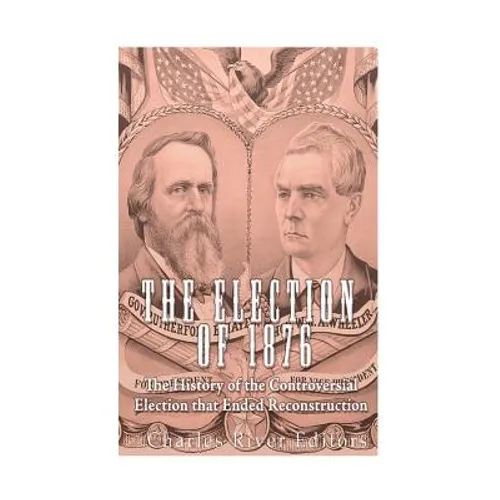
*Includes pictures *Includes contemporary accounts describing the candidates, the conventions, and the election *Includes online resources and a bibliography for further readers *Includes a table of contents "It is impossible, at so early a time, to obtain the result." - Rutherford B. Hayes after the election It seems that every time a presidential election rolls around in America, voters are told that the nation is at a critical fork in its history, and that the decisions reached and the candidates elected will change the course of history. While this is always true to some extent, there are times when it is true to a critical extent. Such was the case in 1876, when the country, weary of four years of Civil War and more than a decade of Reconstruction, was once again on the brink of splitting. While the Northern states celebrated the centennial of American Independence, the South found itself chaffing under the weight of federal occupation. At the same time, the entire nation was shocked and horrified at the direction the Indian Wars in the West were going, culminating just weeks before the election with George Custer's shocking defeat at the Battle of the Little Bighorn. Many assumed that President Ulysses S. Grant, the popular Civil War general who was still a relatively young man at the end of his second term in office, would surely run for a third, but many Americans knew nothing of the scandals and corruption that had surrounded Grant's administration, and he wanted to keep it that way, preferring to be remembered as a successful general rather than a failed president. Thus, after extensive consultations with his advisors, he decided to retire from political life, leaving the Republican nomination wide open. At the same time, Southern politicians were beginning to make a comeback and the Democratic Party was gaining strength, especially in the former Confederate states. The South hoped that if it could once again win the White House, it could finally resume its position as an equal part of the nation, rather than a section being punished for its past. All of this set the stage for one of the strangest interludes in American history. As the nation's two major parties each put forth a large slate of candidates for nomination, two candidates had to come to the fore, and each party selected both a presidential and vice-presidential candidate. These four men ran a bitterly contested race just to reach the general election, and that general election became the most controversial in American history. By the time results rolled in, Democrat Samuel Tilden had won the popular vote and was up by 19 electoral votes, but 20 electoral votes were disputed, and despite claims of fraud, the two sides eventually forged the Compromise of 1877, which gave the presidency to the Republican Rutherford B. Hayes in exchange for the removal of federal troops from the South. The Compromise effectively ended the Reconstruction era, and while it helped bring about the sectional reconciliation of the country, it also allowed the Solid South to emerge, which included the implementation of Jim Crow across the region. In effect, the election ensured another major battle over the civil rights of minorities would ensue decades later. The Election of 1876: The History of the Controversial Election that Ended Reconstruction looks at one of America's most controversial aspects of the 19th century. Along with pictures of important people, places, and events, you will learn about the Missouri Compromise like never before.



