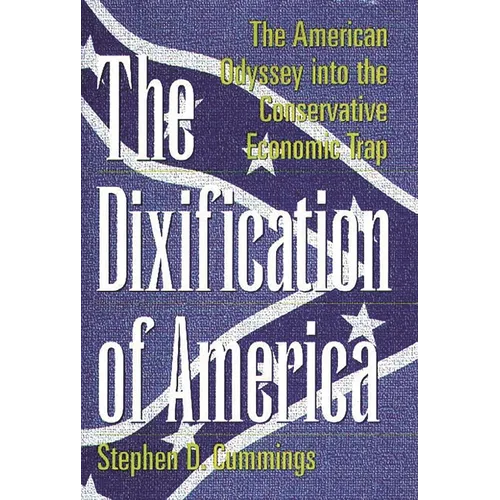
Product Description
by Stephen D. Cummings (Author)
In mid-July 1997, just as the Dow Jones Industrial Average broke 8,000, the federal government announced that personal bankruptcies were at an all-time high, and Second Harvest, the largest food bank network in America, reported increased demand at half of its distribution centers. But this paradox is not new. Throughout the last decade, economists have extolled the virtues and successes of the U.S. economy, while plants have closed, companies have downsized, and those who remain are fearful about their jobs. Contrary to popular opinion, the free-spending liberals have not driven this country to its current level of economic anxiety; it is, in fact, the conservatives. Current economic policy, Cummings argues, is the product of a union between conservative Republican and conservative Southern economic policy--a union that began in the late 1960s.
Before the 1960s, the Southern economy operated as a conservative economic incubator isolated from the rest of the country, and conservative Republicans had to contend with both Democrats and liberal Republicans. After 1969, with Republicans in the White House and with the help of Wallace supporters and later Reagan Democrats, Southern conservative economic policy combined with Republican policy and was gradually exported to the rest of the country. This collaboration and its growing political influence culminated in the Republican control of Congress in the 1990s. Over the decades the South has become more Republican and Southern leaders have had an increasing influence in the Republican Party and in economic policy as a whole. The conservative policy initiatives from this political union have led to some of the same economic problems that have plagued the South since Reconstruction and, fostered by conservative Republicans in the 1920s, ushered in the Great Depression. Current policies, argues Cummings, are leading the country into a similar trap.Author Biography
STEPHEN D. CUMMINGS has been an independent analyst and researcher since 1988 and was previously a financial analyst for the California State Banking Department and a bank chief financial officer. He has worked with economic development organizations in southern California and sits on the Ventura County Revolving Loan Fund Board that assists businesses damaged by the Northridge earthquake. He has published The Ventura County Statistical Abstracts since 1990, and also published The Financial Characteristics of California Banks from 1987 to 1994.