


Product Description
by Eric Paul Roorda (Author)
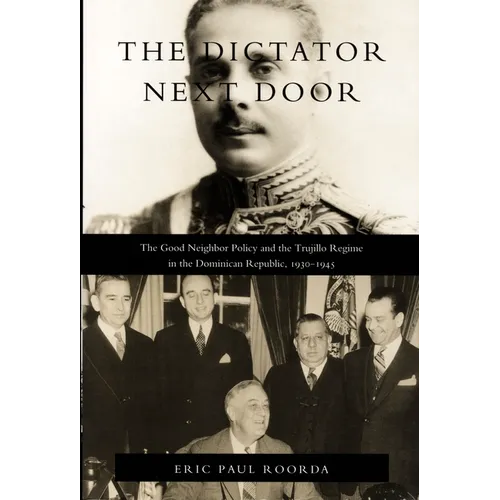
The question of how U.S. foreign policy should manage relations with autocratic governments, particularly in the Caribbean and Latin America, has always been difficult and complex. In The Dictator Next Door Eric Paul Roorda focuses on the relations between the U.S. and the Dominican Republic following Rafael Trujillo's seizure of power in 1930. Examining the transition from the noninterventionist policies of the Hoover administration to Roosevelt's Good Neighbor policy, Roorda blends diplomatic history with analyses of domestic politics in both countries not only to explore the political limits of American hegemony but to provide an in-depth view of a crucial period in U.S. foreign relations.
Although Trujillo's dictatorship was enabled by prior U.S. occupation of the Dominican Republic, the brutality of his regime and the reliance on violence and vanity to sustain his rule was an untenable offense to many in the U.S. diplomatic community, as well as to certain legislators, journalists, and bankers. Many U.S. military officers and congressmen, however-impressed by the civil order and extensive infrastructure the dictator established-comprised an increasingly powerful Dominican lobby. What emerges is a picture of Trujillo at the center of a crowded stage of international actors and a U.S. government that, despite events such as Trujillo's 1937 massacre of 12,000 Haitians, was determined to foster alliances with any government that would oppose its enemies as the world moved toward war.
Using previously untapped records, privately held papers, and unpublished photographs, Roorda demonstrates how caution, confusion, and conflicting goals marked U.S. relations with Trujillo and set the tone for the ambivalent Cold War relations that prevailed until Trujillo's assassination in 1961. The Dictator Next Door will interest Latin Americanists, historians, political scientists, and specialists in international relations and diplomacy.
Back Jacket
An excellent piece of research on a topic that is both important and neglected. Roorda's determination to look at this bilateral relationship as the product of a multiplicity of actors is indeed unique.--Bruce Calder, University of Illinois at Chicago
Author Biography
Eric Paul Roorda is a maritime historian, author and artist. A native of the Great Lakes region, he recently retired from thirty years of college teaching for Johns Hopkins University, Williams College, and Mystic Seaport Museum, among other places.



