Skip to content
Welcome To Our Store.
100,000+ Products for Home, Medical, Office & Classroom Needs
Search
Skip to product information
1 of 1

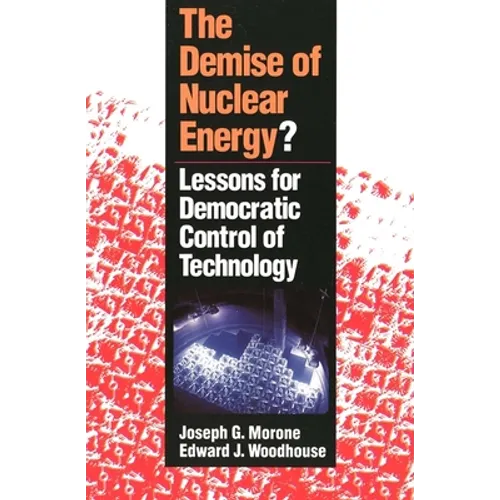
The Demise of Nuclear Energy?: Lessons for Democratic Control of Technology - Paperback

$48.60 USD
$48.60 USD
Sale Sold out
Shipping calculated at checkout.
In stock (100 units), ready to be shipped

Available Offers

Fast delivery available on most orders

Multiple secure payment options accepted

Secure checkout with
  • American Express
  • Apple Pay
  • Diners Club
  • Discover
  • Google Pay
  • Mastercard
  • PayPal
  • Shop Pay
  • Visa

Flight Range: Up to 1,000 meters (3,280 feet)

Maximum Speed: 45 kilometers per hour (28 miles per hour)

For all orders exceeding a value of 100USD shipping is offered for free.

Returns will be accepted for up to 10 days of Customer’s receipt or tracking number on unworn items. You, as a Customer, are obliged to inform us via email before you return the item.

Otherwise, standard shipping charges apply. Check out our delivery Terms & Conditions for more details.

View Product Details
Shopping cart
Product Product subtotal Quantity Price Product subtotal
The Demise of Nuclear Energy?: Lessons for Democratic Control of Technology - Paperback
$48.60/ea
$0.00
$48.60/ea $0.00

Product Description

by Joseph Morone (Author), Edward J. Woodhouse (With)

A nonpartisan analysis of America's nuclear industry-how it was implemented, why it has been so unsuccessful, and what lessons it can teach us for future energy policymaking. Joseph Morone and Edward Woodhouse argue that a radically altered form of nuclear power could provide a more acceptable and less environmentally destructive energy future-if we learn from the failures of the first nuclear era.

Back Jacket

Nuclear power once stood for a bright and exciting future, a tangible symbol of hope and optimism in the postwar era. That began as the dream of a handful of scientists working in wartime laboratories grew into one of the most ambitious technological efforts of the second half of the twentieth century. In scale, expense, technical challenge, and organizational complexity, it was comparable to the Apollo space program. But the outcome could not have been more different.


Number of Pages: 168
Dimensions: 0.55 x 9.2 x 6.15 IN
Illustrated: Yes
Publication Date: April 01, 1989
you might like
