Product Description
by Charles River (Author)
*Includes pictures
*Includes accounts
*Includes online resources and a bibliography for further reading
After the first year of the Civil War, the Confederacy was faced with a serious problem. While the South had enjoyed some stunning victories on land, they had been all but cut off from the world at sea. The more industrialized North had realized that in case of an extended war, the best way to defeat the Confederacy was to starve it of supplies. The rebels started the war with no real navy to speak of, and so the federal government quickly set up a blockade of all Southern ports and river mouths. By depriving the South of revenues derived from its main export, cotton, the North seriously injured the Southern economy.
Without European intervention and the ability to build a navy that could rival the Union's, the Confederacy was mostly reduced to token resistance and using fast moving ships that could evade the blockade and import and export goods. Again, that was only partially successful, and today, the blockade runners are better known for their extracurricular activities; most notably, some of the crews also acted as privateers on the high seas, attacking U.S. shipping and taking any loot for themselves. The daring exploits of these commerce raiders caught the imagination of Southern soldiers and civilians and buoyed up morale, even as the war news turned increasingly grim.
The USS Kearsarge would face off against the Alabama off the French coast. Unaware the Union ship was partly fitted with the armor of an ironclad, the Confederates decided to attack, and after the Alabama was escorted out of the French harbor by French ships, the Alabama and Kearsage dueled with each other in full view of hundreds of Frenchmen gathered on the coast. The battle lasted about an hour until the Alabama was headed to the bottom and dozens of its sailors were killed or wounded. Dozens more would be rescued, including some by the Kearsarge, and with that, the most famous Confederate raiding vessel of all was no more. The battle itself was celebrated in a number of artworks, including a few paintings by Edouard Manet, and the end of the Alabama brought relief to Union supporters across America.
Given how deadly the war was, what makes the history of the CSS Shenandoah, the last ship of the Civil War to surrender, all the more remarkable is that it was one of the only forces not to inflict casualties. It is also an intriguing story, for it begins with a tale of spies at work, not in a country torn apart by war, but in England, a nation both drawn to and terrified of the Civil War. There, the Sea King was purchased and became a different type of ship with a different name, rigged for fighting and rebranded the CSS Shenandoah. Somewhat ironically, it was named for one of the South's most appealing regions, one absolutely fought over and ravaged several times during the war.
In the end, it was not what the Shenandoah did that made it controversial so much as when it did it, because thanks to the painfully slow communications of the 19th century, the crew of the ship wrought some of the most serious damage in the weeks after the war was over. Indeed, when the ship surrendered to the British government in November 1865, it became the last Confederate vessel in the world to do so, meaning the crew faced the possibility of being labeled pirates. Fortunately, it was recognized at the time, as it is today, that this was merely an accident of history, not deliberate piracy, and the men were not prosecuted. Instead, they returned to their home with more stories to tell than most sailors, and less blood on their hands.
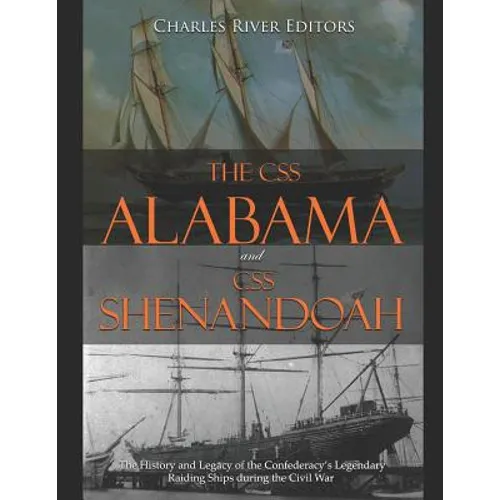
This book examines how the legendary ship preyed on Union shipping across the globe for much of the war. Along with pictures depicting important people, places, and events, you will learn about the CSS Alabama and CSS Shenandoah like never before.