Product Description
by Charles River (Author)
*Includes pictures
*Includes online resources and a bibliography for further reading
In March 1868 in a rock shelter in southwestern France, railroad workers came across relatively modern looking human skulls, flint tools and animal bones. To investigate the limestone cliff shelter, the French geologist Louis Lartet was brought in to perform excavations, during which he uncovered four partial skeletons and ornaments of shell, ivory and reindeer antler. Given the ancient nature of the remains, the specimen types were named after the Abri de Cr -Magnon (abri = rock shelter, an dcr = hole) they were discovered in.
Notable finds from the rock shelter were the Cro-Magnon 1, a nearly complete male skull (missing only his teeth) with remains of his skeleton, Cro-Magnon 2, partial remains of a female cranium, and Cro-Magnon 3, the partial remains of a male cranium. Based on the remains, the site likely dates to the Upper Pleistocene Era between 32,000 and 30,000 years ago. Of the three skulls that were uncovered, Cro-Magnon 1 was considered the type specimen for the Western European "race" (an artificial construct of the time it was discovered), even though the skull featured more gracile features than the other two skulls and was not that similar to them either.
The Cro-Magnon were Homo sapiens, and the most defining characteristics of the species are the cultural traits that begin to show in the archaeological record. Tools were beginning to be made from multiple materials, and these people would often travel long distances or trade to acquire specific materials for tools. Symbolic material became increasingly common among them, as cave paintings, figurines, shell beads, pendants, and even early burials were more common with modern humans than Neanderthals, and this abstract way of thinking may have helped the species be more successful in adapting than the other contemporary humans.
While in the 21st century, scientists may refer to the Cro-Magnon as European Early Modern Humans, this was not case when the Cro-Magnon remains were first uncovered. In 19th century Europe, there was a nationalist debate as to where the "first" Europeans emerged, and the mixing of nationalistic concepts and cultural hierarchy that was prevalent in Europe at this time made the scientific understanding of the Cro-Magnon within human evolution slow to progress. It is therefore necessary to look at the Cro-Magnon's biological history and the European cultural history to analyze how the remains of Cro-Magnon have been viewed and used over the past few centuries.
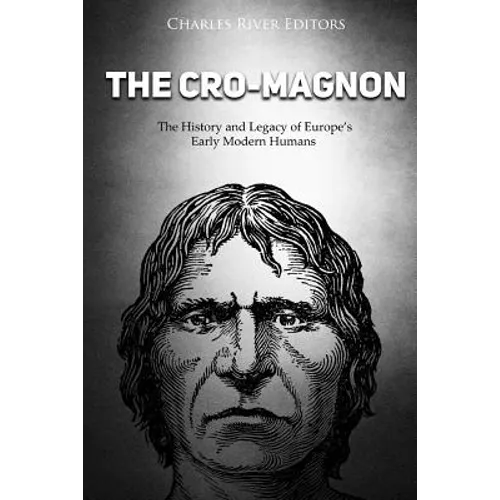
The Cro-Magnon: The History and Legacy of Europe's Early Modern Humans looks at how these early Homo sapiens reached Europe, their interactions with the Neanderthals, and more. Along with pictures depicting important people, places, and events, you will learn about the Cro-Magnon like never before.