Skip to content
Save 5% on your next order with code PREMIUM5!
100,000+ Products for Home, Medical, Office & Classroom Needs
Search
Skip to product information
1 of 1

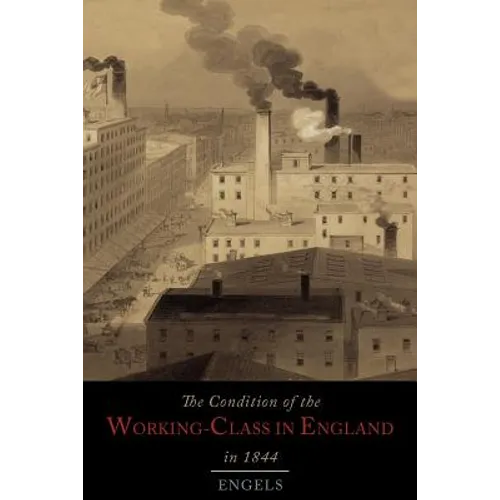
The Condition of the Working-Class in England in 1844 - Paperback

$13.54 USD
$13.54 USD
Sale Sold out
Shipping calculated at checkout.
In stock (100 units), ready to be shipped

Available Offers

Fast delivery available on most orders

Multiple secure payment options accepted

Secure checkout with
  • American Express
  • Apple Pay
  • Diners Club
  • Discover
  • Google Pay
  • Mastercard
  • PayPal
  • Shop Pay
  • Visa

Flight Range: Up to 1,000 meters (3,280 feet)

Maximum Speed: 45 kilometers per hour (28 miles per hour)

For all orders exceeding a value of 100USD shipping is offered for free.

Returns will be accepted for up to 10 days of Customer’s receipt or tracking number on unworn items. You, as a Customer, are obliged to inform us via email before you return the item.

Otherwise, standard shipping charges apply. Check out our delivery Terms & Conditions for more details.

View Product Details
Shopping cart
Product Product subtotal Quantity Price Product subtotal
The Condition of the Working-Class in England in 1844 - Paperback
$13.54/ea
$0.00
$13.54/ea $0.00

Product Description

by Friedrich Engels (Author)

2012 Reprint of 1950 Edition. Exact facsimile of the original edition, not reproduced with Optical Recognition Software. Originally written in German and published in English in 1892 this is a classic a study of the working class in Victorian England. It was also Engels' first book, written during his stay in Manchester from 1842 to 1844. Manchester was then at the very heart of the Industrial Revolution, and Engels compiled his study from his own observations and detailed contemporary reports. Engels argues that the Industrial Revolution made workers worse off. He shows, for example, that in large industrial cities mortality from disease, as well as death-rates for workers were higher than in the countryside. In cities like Manchester and Liverpool mortality from smallpox, measles, scarlet fever and whooping cough was four times as high as in the surrounding countryside, and mortality from convulsions was ten times as high as in the countryside. Engels' work is considered by many to be a classic account of the condition of the industrial working class. It was originally addressed to a German audience. The eldest son of a successful German textile industrialist, Engels became involved in radical journalism in his youth. Sent to England, what he saw there made him even more radical. About this time he formed his lifelong intellectual partnership with Karl Marx.


Number of Pages: 324
Dimensions: 0.73 x 9 x 6 IN
Publication Date: January 02, 2013
you might like
