Skip to content
Welcome To Our Store.
100,000+ Products for Home, Medical, Office & Classroom Needs
Search
Skip to product information
1 of 1

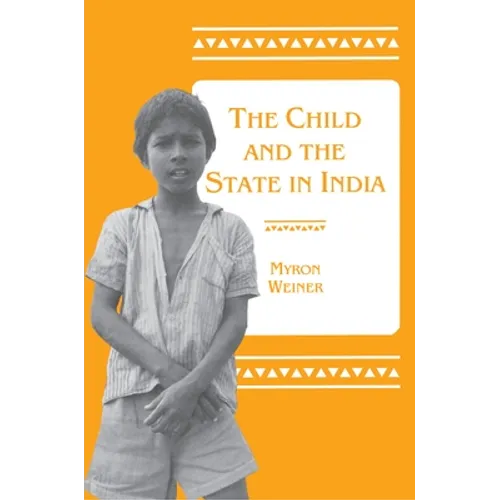
The Child and the State in India: Child Labor and Education Policy in Comparative Perspective - Paperback

$94.05 USD
$94.05 USD
Sale Sold out
Shipping calculated at checkout.
In stock (100 units), ready to be shipped

Available Offers

Fast delivery available on most orders

Multiple secure payment options accepted

Secure checkout with
  • American Express
  • Apple Pay
  • Diners Club
  • Discover
  • Google Pay
  • Mastercard
  • PayPal
  • Shop Pay
  • Visa

Flight Range: Up to 1,000 meters (3,280 feet)

Maximum Speed: 45 kilometers per hour (28 miles per hour)

For all orders exceeding a value of 100USD shipping is offered for free.

Returns will be accepted for up to 10 days of Customer’s receipt or tracking number on unworn items. You, as a Customer, are obliged to inform us via email before you return the item.

Otherwise, standard shipping charges apply. Check out our delivery Terms & Conditions for more details.

View Product Details
Shopping cart
Product Product subtotal Quantity Price Product subtotal
The Child and the State in India: Child Labor and Education Policy in Comparative Perspective - Paperback
$94.05/ea
$0.00
$94.05/ea $0.00

Product Description

by Myron Weiner (Author)

India has the largest number of non-schoolgoing working children in the world. Why has the government not removed them from the labor force and required that they attend school, as have the governments of all developed and many developing countries? To answer this question, this major comparative study first looks at why and when other states have intervened to protect children against parents and employers. By examining Europe of the nineteenth century, the United States, Japan, and a number of developing countries, Myron Weiner rejects the argument that children were removed from the labor force only when the incomes of the poor rose and employers needed a more skilled labor force. Turning to India, the author shows that its policies arise from fundamental beliefs, embedded in the culture, rather than from economic conditions. Identifying the specific values that elsewhere led educators, social activists, religious leaders, trade unionists, military officers, and government bureaucrats to make education compulsory and to end child labor, he explains why similar groups in India do not play the same role.


Number of Pages: 232
Dimensions: 0.59 x 9.22 x 6.08 IN
Publication Date: February 19, 1991
you might like
