Product Description
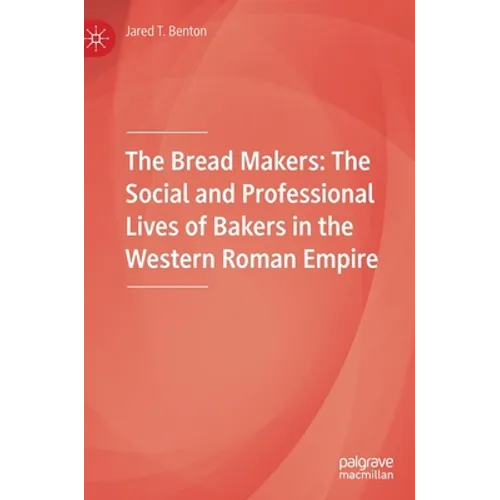
by Jared T. Benton (Author)
Bread was the staple of the ancient Mediterranean diet. It was present in the meals of emperors and on the tables of the poorest households. In many instances, a loaf of bread probably constituted an entire meal. As such, bread was both something that unified society and a milieu through which social and ethnic divisions played out. Similarly, bakers were not a monolithic demographic. They served both the rich and the poor, but some bakers clearly operated within regional traditions. Some lived in big cities and others lived in small towns. Some bakers made flat breads and others made leavened loaves. Some made coarse brown loaves and others specialized in fancier white breads. This book offers new methods and new ways of framing bread production in the Roman world to reveal the nuances of an industry that fed an empire. Inscriptions, Roman law, and material remains of Roman-period bakeries are combined to expose the cultural context of bread making, the economic context of commercial baking, the social hierarchy within the workforces of bakeries, and the socio-economic strategies of Roman bakers.
Back Jacket
Bread was the staple of the ancient Mediterranean diet. It was present in the meals of emperors and on the tables of the poorest households. In many instances, a loaf of bread probably constituted an entire meal. As such, bread was both something that unified society and a milieu through which social and ethnic divisions played out. Similarly, bakers were not a monolithic demographic. They served both the rich and the poor, but some bakers clearly operated within regional traditions. Some lived in big cities and others lived in small towns. Some bakers made flat breads and others made leavened loaves. Some made coarse brown loaves and others specialized in fancier white breads. This book offers new methods and new ways of framing bread production in the Roman world to reveal the nuances of an industry that fed an empire. Inscriptions, Roman law, and material remains of Roman-period bakeries are combined to expose the cultural context of bread making, the economic context of commercial baking, the social hierarchy within the workforces of bakeries, and the socio-economic strategies of Roman bakers.
Author Biography
Jared T. Benton is Assistant Professor of Ancient Art and Archaeology at Old Dominion University, USA. He has excavated in Italy, Greece, Spain, and Morocco. Since 2013, Benton has been a area supervisor for the Contrada Agnese Project, part of the American Excavations at Morgantina. Since 2017, he has been director of the Urban Economy of Volubilis Project.