Product Description
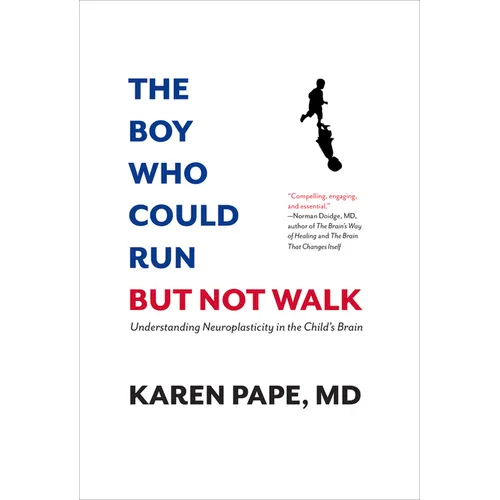
by Karen Pape (Author)
In this groundbreaking book, Dr. Karen Pape tells the story of how some children with early brain damage astounded everyone around them. The brain injury they suffered at or near birth had led to motor problems such as the awkward gait we associate with cerebral palsy. Yet they were able to run, kick a soccer ball, tap dance, and play tennis. This was not supposed to happen. It ran counter to the prevailing belief that the brain is hardwired and fixed. When Dr. Pape first shared her remarkable findings, she ran into fierce opposition from mainstream medicine. Yet this courageous neonatologist didn't back down.
In her clinical practice, Pape helped many young brain-damaged children to significantly improve their movement. It led her to ask why some of them could run but not walk with the same ease. Her answer was astounding: By the time they learned to run, their brains had healed. The awkward walking gait was actually a bad habit acquired while the brain was still damaged.
This is the power and the beauty of neuroplasticity, the brain's amazing ability to change and heal. It has revolutionized the treatment of adults who suffer stroke. Now, for the first time, this remarkable book shows that children with a brain injury at or near birth can get better, too. These stories of children's recovery and improvements are a revelation--surprising, inspiring, and illuminating. They offer real hope for some of the world's most vulnerable children and a better understanding of how the baby brain grows and recovers.
Author Biography
Karen Pape, MD, FRCPC, is a neonatologist and clinical neuroscientist. As a medical innovator, she is challenging the system to raise expectations for babies born with early brain and nerve injury. She was a neonatologist and director of the Neonatal Follow-up Clinic at Toronto's renowned Hospital for Sick Children, with an additional research fellowship in Neonatal Pathology and Ultrasound Brain Scans in London, England. She co-authored a book on baby brain pathology and was instrumental in the development of neonatal ultrasound brain scanning, now used in neonatal intensive care units worldwide. Pape then directed work at the Magee Clinic in Toronto, developing a new, personalized approach to children and adults with early onset brain or nerve damage. She has lectured widely and conducted over 200 training workshops and conferences for parents, therapists, and physicians throughout North America and internationally in 12 countries. Dr. Pape lives in Toronto, Canada.