


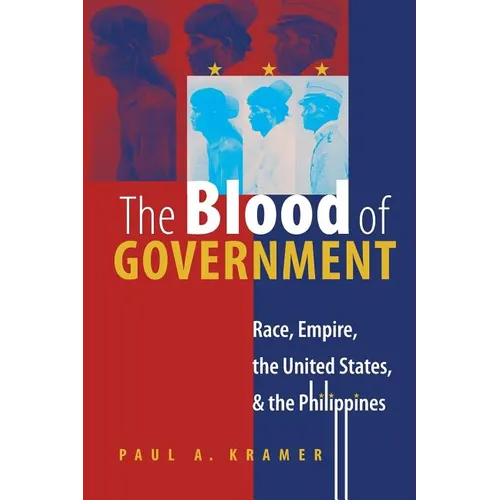
Product Description
by Paul a. Kramer (Author)
In 1899 the United States, having announced its arrival as a world power during the Spanish-Cuban-American War, inaugurated a brutal war of imperial conquest against the Philippine Republic. Over the next five decades, U.S. imperialists justified their colonial empire by crafting novel racial ideologies adapted to new realities of collaboration and anticolonial resistance. In this pathbreaking, transnational study, Paul A. Kramer reveals how racial politics served U.S. empire, and how empire-building in turn transformed ideas of race and nation in both the United States and the Philippines.
Kramer argues that Philippine-American colonial history was characterized by struggles over sovereignty and recognition. In the wake of a racial-exterminist war, U.S. colonialists, in dialogue with Filipino elites, divided the Philippine population into "civilized" Christians and "savage" animists and Muslims. The former were subjected to a calibrated colonialism that gradually extended them self-government as they demonstrated their "capacities." The latter were governed first by Americans, then by Christian Filipinos who had proven themselves worthy of shouldering the "white man's burden." Ultimately, however, this racial vision of imperial nation-building collided with U.S. nativist efforts to insulate the United States from its colonies, even at the cost of Philippine independence. Kramer provides an innovative account of the global transformations of race and the centrality of empire to twentieth-century U.S. and Philippine histories.
Front Jacket
Examining racial politics during American colonial rule in the Philippines, Kramer shows that Americans did not merely export their own racial politics on a blank slate; rather, they dispensed power on the basis of race, but often faced contentious dialogue about it with Filipino elites. He argues that in order to understand Philippine-American colonialism, it is important to consider the Spanish period of colonization that preceded it.
Author Biography
Paul A. Kramer is associate professor of history at Vanderbilt University.



