Product Description
by Peter W. Blaich (Author)
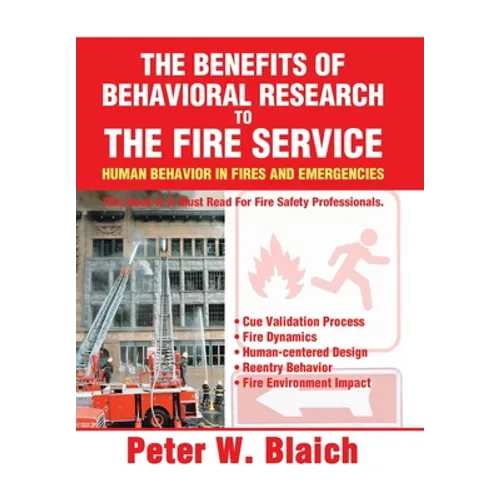
Previously, Fire Safety Engineers worked under a simple assumption that when a fire alarm activated, people will evacuation immediately. It was believed that how quickly people managed to evacuate a building depended mainly on physical abilities as well as the location of the nearest exit and the behavior of the fire. But work by Behavioral Scientists has found that this idea falls considerably short. Research now shows that as much as two thirds of the time it takes occupants to exit a building after the fire alarm sounds is startup time or time spent milling about and looking for more information. Ultimately, such a finding has big implications for architects, engineers and fire protection specialists hoping to design safer buildings. Subsequently, after the 9/11 terrorists attack this new way of thinking based on Human Behavior in Fire and Emergencies is getting more attention and funding. Studying how occupants react as events unfolded and finding out what helped or hindered the evacuation efforts during the 9/11 attacks has provided invaluable information for future building designs. Ultimately, it is the author of this book believes that this is going to impact structured emergency preparedness in a major way. The basic premise of this book is that design should be human-centered because it humancentered design that provides for the information that people need to adapt to the chaotic and uncertain way that fire develops.
Author Biography
Peter William Blaich possesses a Master of Science Degree in Fire Protection Management from John Jay College of Criminal Justice. He is a Lieutenant with the Fire Department of New York as well as an Adjunct Professor of Fire Science at John Jay College of Criminal Justice. He is currently a member of both the National Fire Protection Association as well as the Society of Protection Engineers and has been published in Collegiate Peer Reviews and Firefighting Journals. Peter is a Fourth Generation New York City Fire Officer a World Trade Center Survivor who currently lives on Staten Island with his Wife Irene Mary and their two Sons Billy and Adam.