


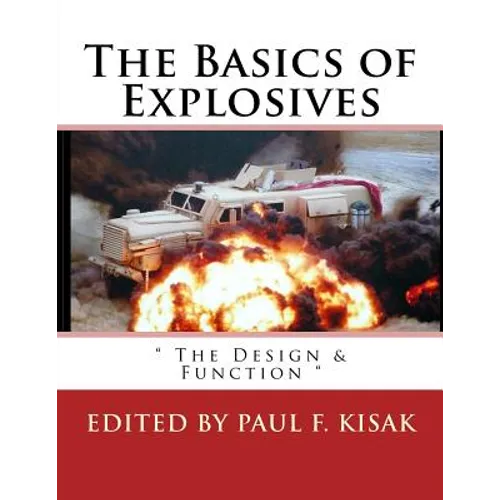
Product Description
by Paul F. Kisak (Author)
For Military & Law Enforcement OnlyExplosives are used around the world for both productive purposes such as building hydroelectric dams and mining and destructive purposes, primarily by the military. Explosives are usually divided into two classes those that burn and those that detonate. Detonated explosives typically produce a shock front or shock wave that results from an exothermic chemical reaction. This chemical reaction usually results in a relatively stable compound being exposed to a concentrated source of energy such as a blasting cap or other type of detonation device. The solid explosive will phase shift to a high temperature expanding gas in approximately one-millionth of a second (a nanosecond) with pressures exceeding several million pounds per square inch.For one example we can examine 'Det Cord', also known as Primacord which is usually produced in rolled up or coiled section of cord. This cord is then unwound and when detonated will produce an explosive front along the length of the cord that travels at the speed of 5 miles per second. In other words, if you laid out 5 miles of Det cord, and detonated it, the 5 miles of cord would be explosively spent in one second. Whereas if you burned or ignited the same amount cord it could take weeks to burn to completion.This 2 volume set explains the nature of the various industrial and military explosives and also discusses some of the chemistry involved in these explosives - particularly in the 2nd volume.
Author Biography
Paul F. Kisak has degrees in Engineering Physics & Nuclear Engineering from the University of Michigan and is an Engineer & Former Intelligence Officer for the CIA & US Intelligence Community and was President of an award-winning Defense Contracting Company. He has authored several books, edited numerous other books and has written over 75 Technical, Classified & Unclassified papers, Articles & Essays. He has also been a Contributing Author for The International Encyclopedia on Intelligence and Counter-Intelligence and written several award-winning software manuals that have been sold in more than a dozen countries. He has appeared in Marquis "Who's Who in the World" & "Who's Who in Science & Engineering" and continues to edit and write.