Skip to content
Welcome To Our Store.
100,000+ Products for Home, Medical, Office & Classroom Needs
Search
Skip to product information
1 of 2

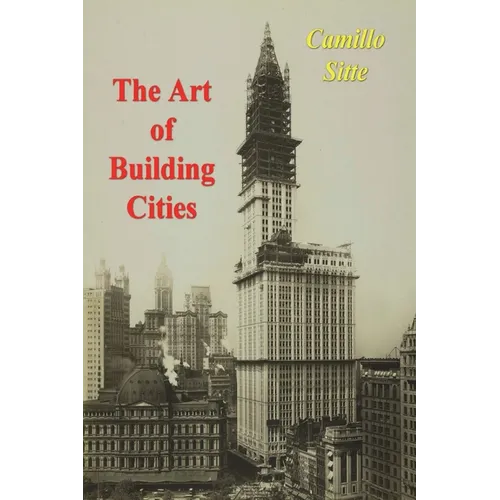
The Art of Building Cities: City Building According to Its Artistic Fundamentals - Paperback

$12.89 USD
$12.89 USD
Sale Sold out
Shipping calculated at checkout.
In stock (70 units), ready to be shipped

Available Offers

Fast delivery available on most orders

Multiple secure payment options accepted

Secure checkout with
  • American Express
  • Apple Pay
  • Diners Club
  • Discover
  • Google Pay
  • Mastercard
  • PayPal
  • Shop Pay
  • Visa

Flight Range: Up to 1,000 meters (3,280 feet)

Maximum Speed: 45 kilometers per hour (28 miles per hour)

For all orders exceeding a value of 100USD shipping is offered for free.

Returns will be accepted for up to 10 days of Customer’s receipt or tracking number on unworn items. You, as a Customer, are obliged to inform us via email before you return the item.

Otherwise, standard shipping charges apply. Check out our delivery Terms & Conditions for more details.

View Product Details
Shopping cart
Product Product subtotal Quantity Price Product subtotal
The Art of Building Cities: City Building According to Its Artistic Fundamentals - Paperback
$12.89/ea
$0.00
$12.89/ea $0.00

Product Description

by Camillo Sitte (Author), Charles T. Stewart (Translator)

Camillo Sitte (1843-1903) was a noted Austrian architect, painter and theoretician who exercised great influence on the development of urban planning in Europe and the United States. The publication at Vienna in May 1889 of "Der Stadtebau nach seinen künstlerischen Grundsatzen" ("The Art of Building Cities") began a new era in Germanic city planning. Sitte strongly criticized the current emphasis on broad, straight boulevards, public squares arranged primarily for the convenience of traffic, and efforts to strip major public or religious landmarks of adjoining smaller structures regarded as encumbering such monuments of the past. Sitte proposed instead to follow what he believed to be the design objectives of those whose streets and buildings shaped medieval cities. He advocated curving or irregular street alignments to provide ever-changing vistas. He called for T-intersections to reduce the number of possible conflicts among streams of moving traffic. He pointed out the advantages of what came to be know as "turbine squares"--civic spaces served by streets entering in such a way as to resemble a pin-wheel in plan. His teachings became widely accepted in Austria, Germany, and Scandinavia, and in less than a decade his style of urban design came to be accepted as the norm in those countries.


Number of Pages: 140
Dimensions: 0.33 x 9 x 6 IN
Publication Date: January 20, 2023
you might like
