


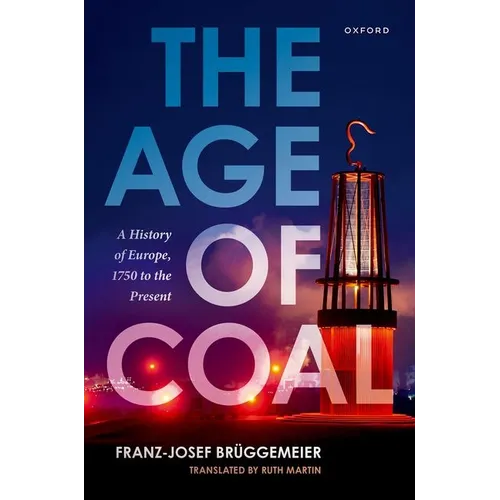
Product Description
by Franz-Josef Brüggemeier (Author), Ruth Martin (Author)
In Europe, coal was by far the most important source of energy from the beginning of industrialisation until well after the Second World War. It was indispensable in shaping the modern world, and in altering our understanding of time and space. Used foundationally in organic chemistry, coal helped to create the multitude of colours, medicines, and man-made products which still shape our daily lives. Without coal, the First and Second World Wars would have looked very different, and in the peace conferences after both wars, the control of this resource was of central importance. At its height, coal mining in Europe employed almost two and a half million people, mostly men, who had often migrated over vast distances to find work in this booming industry, despite the difficulties and dangers. As a result of the capitalist model of the industry, mining saw significant labour organization and strikes.
The use of coal, however, created environmental problems. During and after industrialisation, the demand for energy multiplied, and coal was the only resource that could satisfy this increasing demand, despite the high levels of CO2 emission. In contemporary society, world-wide attempts are being made to reduce these emissions, but while in Europe, coal mining and use has declined, world-wide its production and consumption have reached new heights. Even in Europe, coal's major legacy persists: society's dependence on vast amounts of easily available, transportable, and affordable energy. Franz-Josef Brüggemeier uses modern Europe's reliance on coal to tell a wide-ranging story of how energy can shape a society.Author Biography
Franz-Josef Brüggemeier, Emeritus Professor of Social, Economic, and Environmental History, Freiberg University
Franz-Josef Brüggemeier studied at the Universities of Bremen and Essen, and became a Professor at the University of Hannover in 1995. In 1998, he moved to the University of Freiburg, where he was a Professor of Economic, Social, and Environmental History until his retirement in 2018. He has been a visiting Professor at the Universities of York and Harvard, and has organised a number of exhibitions on subjects such as Coal in Europe and the History of Football.


