


Product Description
by Ari Larissa Heinrich (Author)
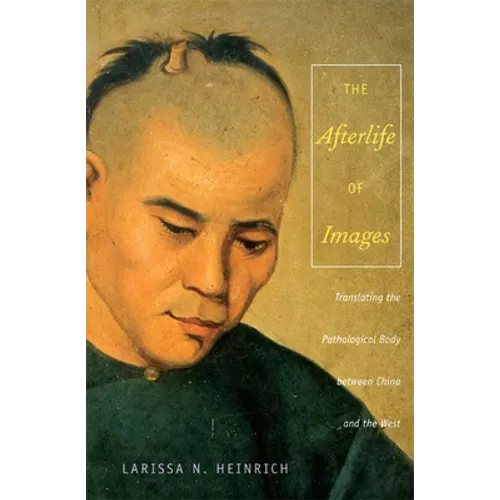
In 1739 China's emperor authorized the publication of a medical text that included images of children with smallpox to aid in the diagnosis and treatment of the disease. Those images made their way to Europe, where they were interpreted as indicative of the ill health and medical backwardness of the Chinese. In the mid-nineteenth century, the celebrated Cantonese painter Lam Qua collaborated with the American medical missionary Peter Parker in the creation of portraits of Chinese patients with disfiguring pathologies, rendered both before and after surgery. Europeans saw those portraits as evidence of Western medical prowess. Within China, the visual idiom that the paintings established influenced the development of medical photography. In The Afterlife of Images, Ari Larissa Heinrich investigates the creation and circulation of Western medical discourses that linked ideas about disease to Chinese identity beginning in the eighteenth century.
Combining literary studies, the history of science, and visual culture studies, Heinrich analyzes the rhetoric and iconography through which medical missionaries transmitted to the West an image of China as "sick" or "diseased." He also examines the absorption of that image back into China through missionary activity, through the earliest translations of Western medical texts into Chinese, and even through the literature of Chinese nationalism. Heinrich argues that over time "scientific" Western representations of the Chinese body and culture accumulated a host of secondary meanings, taking on an afterlife with lasting consequences for conceptions of Chinese identity in China and beyond its borders.
Back Jacket
Larissa N. Heinrich deftly weaves a range of materials--including prints, painting, photography, and literature--into a fascinating narrative of the ways visual and linguistic tropes formed and reinforced certain eighteenth- and nineteenth-century Western understandings of China. Furthermore, she is attentive to the dialectics of the relationship, especially the way that Western knowledge and ways of seeing shaped certain Chinese concepts about China and its problems, especially in the latter half of the nineteenth century and the early twentieth.--Stanley K. Abe, author of "Ordinary Images"
Author Biography
Ari Larissa Heinrich is Professor of Chinese Literature and Media at the Australian National University. He is the author of Chinese Surplus: Biopolitical Aesthetics and the Medically Commodified Body, also published by Duke University Press, and coeditor of Embodied Modernities: Corporeality and Representation in Chinese Cultures.



