Product Description
by Brent A. Vogt (Author)
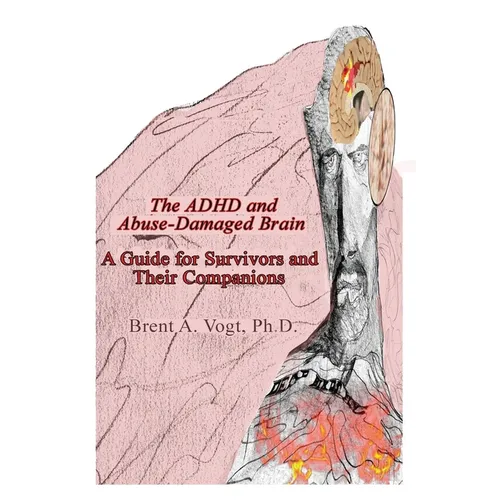
This psychoautobiography by a senior neuroscientist focuses on two psychiatric disorders: Attention-Deficit/Hyperactivity Disorder (ADHD) and adolescent abuse. It is written for the general reader and neuroscience and psychology undergraduate students. It will have wide appeal as 20-30% of readers have ADHD and the number of abuse survivors is high. Also, parents of children with ADHD will find it useful in guiding their children through delayed cognitive and social development, breaking social boundaries, reduced fear and even driving habits. The author's work and 70 years of experience brings these pathologies together as he began at age 7 with ADHD, reveals subsequent abuse, treatments and mental breakdowns. His efforts to relieve pain, stress and suffering are thought-provoking and often novel. While ADHD pathology appears permanent, readers are assured that it can be overcome with parental assistance and drugs and success stories are provided in Michael Phelps gold medalist, comedian Howie Mandel and commentator James Carvel. Maltreatment is highly associated with aggression, posttraumatic stress disorder (PTSD) and poor parenting. Such difficulties were marked in the author's birth family as he was often beaten to the point of bleeding to remove his odd, ADHD-mediated behaviors for misconceived religious views. His parents neglected personal problems and emotionally abused him. Abuse led to PTSD, anxiety, borderline personality (BPD) and bipolar (BD) disorders. While early efforts to relieve stress were accidental though informative, many psychotherapies are reviewed. Examples of using art for stress coping include Alan Cumming, Beth Hart and a few of his own works. Individuals with such diagnoses often do not appreciate that their brain is seriously damaged and there are few methods for reversing it. This is documented with brain images and a short text on the limbic system where damage can result in the above symptoms. He shared Dialectical Behavioral Therapy (DBT) with his daughter and it improved his PTSD/BPD and their relationship. An image shows that DBT actually remediates limbic system damage involved in these symptoms. Thus, ADHD, types of and abuse outcomes, pain, suffering and empathy are addressed. A focus on the brain shows how and why individuals are impaired in both disorders and how they can evolve into stress, anxiety and other disorders. Abuse survivors will benefit from sorting out their lives like the author. His late adolescence transition to college was difficult as he became depressed showing signs of BD with a Spring mania. Later psychotherapy and drugs helped him and will survivors to overcome abuse outcomes. The Cycle of Violence theory posits that violence and aggression continue into future generations and the example of Ike and Tina Turner is reviewed as a prelude to the author's family. While he did not physically abuse his children, his lack of insight into the three types of abuse led to other forms of it. The goal is to help abuse survivors explicitly break this Cycle. The book concludes with answering the question, Can the suffering of abused children be understood and resolved with animal research? The answer is yes and is required due to human imaging limitations. Overall Conclusions are provided as they bring together key issues the reader should consider. It emphasizes how understanding brain changes enlighten survivor's and their companion's life journey together.