


Product Description
by Graham Holderness (Author)
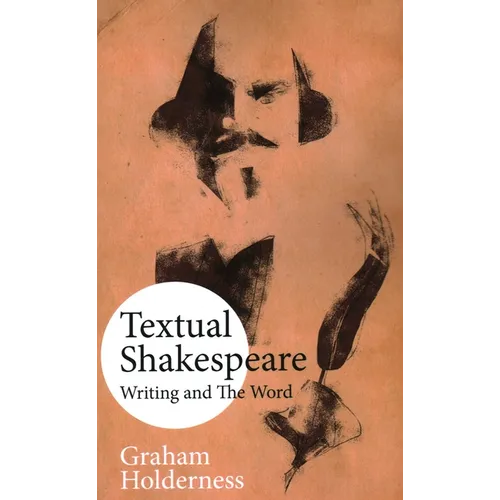
In this expanded and much revised new edition Professor Holderness reassesses the Bard as a writer in the light of the most recent "revolution" in bibliography and textual studies. This has shifted much opinion about the playwright, how he worked, and with whom he collaborated. Yet there remain many unsolved riddles. / This is a book about unresolved (and unresolvable?) questions about Shakespeare, and about writing, creativity and its study. / Professor Holderness reviews the current debates in textual theory and practice. He concludes that "Shakespeare" is not a writer but a collection of documents, none of which can with any certainty be linked to whatever it was the author wanted to say. He goes beyond both traditional and "materialist" bibliography to show that texts are both physical media, made and remade by a series of craftspeople; and rich repositories of changeable meaning. / According to modern literary studies all texts are copies, always already changed, and there are no "originals". Editors are translators; and scholars and critics rewrite the writing they study. The book advocates a recovery of ancient concepts such as creativity and imagination, together with a recognition of the technical and essentially collaborative nature of all writing. Shakespeare is then situated within this theoretical context, via a brief history of the plays' textual reproduction. / A series of chapters on individual plays provides illustrative examples of such textual activities in practice. The book concludes that all Shakespeare scholarship, editing and criticism are devoted to a quest for something missing: not the lost manuscript (which even if recovered would not in any case answer all our questions), but rather the absence that writing always invokes.
Author Biography
The noted critic Graham Holderness is the author or editor of some 50 books, with overall sales of tens of thousands. His work can be divided into three strands: (1) literary criticism, theory and scholarship, especially in Shakespeare studies; (2) the pioneering of an innovative new method of 'creative criticism'; and (3) creative writing in fiction, poetry and drama. His poetry collection Craeft received a Poetry Book Society award in 2002. His play Wholly Writ was performed at Shakespeare's Globe, and by Royal Shakespeare company actors in Stratford-upon-Avon. His publishers have included Penguin, Cambridge University Press, Bloomsbury, Palgrave Macmillan, Routledge, Manchester University Press, and Lion Books. / In addition to his fascinating study of 'Smithfield Stories' Meat, Murder, Malfeasance, Medicine and Martyrdom (EER, 2019) EER will also publish his other new study, Textual Shakespeare, and a new edition of The Prince of Denmark in Spring 2020.