Skip to content
Welcome To Our Store.
100,000+ Products for Home, Medical, Office & Classroom Needs
Search
Skip to product information
1 of 2

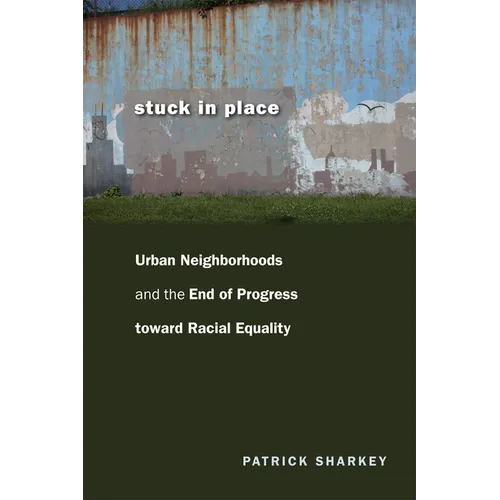
Stuck in Place: Urban Neighborhoods and the End of Progress toward Racial Equality - Paperback

$58.14 USD
$58.14 USD
Sale Sold out
Shipping calculated at checkout.
In stock (100 units), ready to be shipped

Available Offers

Fast delivery available on most orders

Multiple secure payment options accepted

Secure checkout with
  • American Express
  • Apple Pay
  • Diners Club
  • Discover
  • Google Pay
  • Mastercard
  • PayPal
  • Shop Pay
  • Visa

Flight Range: Up to 1,000 meters (3,280 feet)

Maximum Speed: 45 kilometers per hour (28 miles per hour)

For all orders exceeding a value of 100USD shipping is offered for free.

Returns will be accepted for up to 10 days of Customer’s receipt or tracking number on unworn items. You, as a Customer, are obliged to inform us via email before you return the item.

Otherwise, standard shipping charges apply. Check out our delivery Terms & Conditions for more details.

View Product Details
Shopping cart
Product Product subtotal Quantity Price Product subtotal
Stuck in Place: Urban Neighborhoods and the End of Progress toward Racial Equality - Paperback
$58.14/ea
$0.00
$58.14/ea $0.00

Product Description

by Patrick Sharkey (Author)

In the 1960s, many believed that the civil rights movement's successes would foster a new era of racial equality in America. Four decades later, the degree of racial inequality has barely changed. To understand what went wrong, Patrick Sharkey argues that we have to understand what has happened to African American communities over the last several decades. In Stuck in Place, Sharkey describes how political decisions and social policies have led to severe disinvestment from black neighborhoods, persistent segregation, declining economic opportunities, and a growing link between African American communities and the criminal justice system.As a result, neighborhood inequality that existed in the 1970s has been passed down to the current generation of African Americans. Some of the most persistent forms of racial inequality, such as gaps in income and test scores, can only be explained by considering the neighborhoods in which black and white families have lived over multiple generations. This multigenerational nature of neighborhood inequality also means that a new kind of urban policy is necessary for our nation's cities. Sharkey argues for urban policies that have the potential to create transformative and sustained changes in urban communities and the families that live within them, and he outlines a durable urban policy agenda to move in that direction.

Author Biography

Patrick Sharkey is assistant professor of sociology at New York University.

Number of Pages: 264
Dimensions: 0.7 x 8.9 x 5.8 IN
Illustrated: Yes
Publication Date: April 19, 2013
you might like

