


Product Description
by Afsaneh Najmabadi (Author)
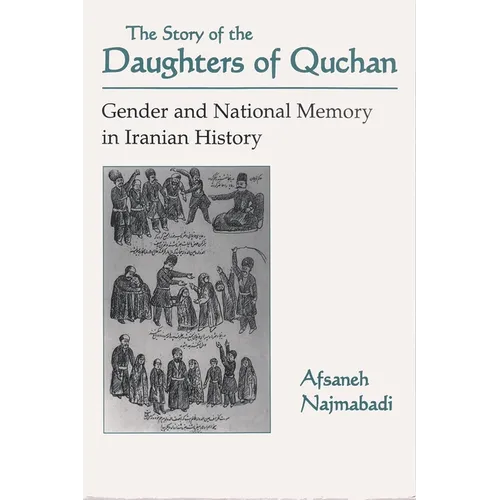
In 1905, the year preceding the Iranian Constitutional Revolution, Iranian women and girls were sold by needy peasants to pay their taxes, or taken as booty in a raid by Turkoman tribesmen against a village settlement in Northeast Iran. The telling and retelling of the event became a focus for outage and grievance, contributing to both popular mobilizations against autocracy and a constitutional regime. Indeed, the narration of this event took all of Iran by storm.
Shortly after the opening of a new parliament in 1906, relatives of some of the captive women demanded that the parliament punish those responsible. The newly reconstituted Ministry of Justice investigated the matter and actually tried several people who were alleged to be responsible. In The Story of the Daughters of Quchan, Afsaneh Najambodi investigates what made this incident more powerful. How did a familiar incident of rural destitution and the story of yet another Turkoman raid became a uniquely outrageous story? Although it captured the Iranian national imagination, this event has been all but forgotten. What does this "amnesia" tell us about the political culture or modern Iran, as well as that country's national memory, and about modernist historiography, as well as that country's national memory, and about modernist historiography in general?Author Biography
Afsaneh Najambodi is associate professor of women's studies at Barnard College, Columbia University. She is presently at work on a book on gender in modern Iran.
Number of Pages: 260
Dimensions: 0.59 x 9.08 x 6.05 IN
Illustrated: Yes
Publication Date: December 01, 1998



