


Product Description
by Katherine Dauge-Roth (Editor), Craig Koslofsky (Editor)
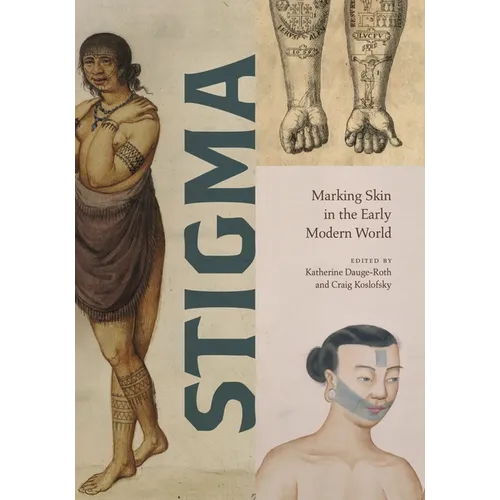
The early modern period opened a new era in the history of dermal marking. Intensifying global travel and trade, especially the slave trade, bought diverse skin-marking practices into contact as never before. Stigma examines the distinctive skin cultures and marking methods of Asia, Europe, Africa, and the Americas as they began to circulate and reshape one another in the early modern world.
By highlighting the interwoven histories of tattooing, branding, stigmata, baptismal and beauty marks, wounds and scars, this volume shows that early modern markers of skin and readers of marked skin did not think about different kinds of cutaneous signs as separate from each other. On the contrary, Europeans described Indigenous tattooing in North America, Thailand, and the Philippines by referring their readers to the tattoos Christian pilgrims received in Jerusalem or Bethlehem. When explaining the devil's mark on witches, theologians claimed it was an inversion of holy marks such as those of baptism or divine stigmata. Stigma investigates how early modern people used permanent marks on skin to affirm traditional roles and beliefs, and how they hybridized and transformed skin marking to meet new economic and political demands.
In addition to the editors, the contributors to this volume are Xiao Chen, Ana Fonseca Conboy, Peter Erickson, Claire Goldstein, Matthew S. Hopper, Katrina H. B. Keefer, Mordechay Lewy, Nicole Nyffenegger, Mairin Odle, and Allison Stedman.
Author Biography
Katherine Dauge-Roth is Associate Professor of Romance Languages and Literatures at Bowdoin College. She is the author of Signing the Body: Marks on Skin in Early Modern France.
Craig Koslofsky is Professor of History and Germanic Languages and Literatures at the University of Illinois, Urbana-Champaign. He is the author of Evening's Empire: A History of the Night in Early Modern Europe and The Reformation of the Dead: Death and Ritual in Early Modern Germany, 1450-1700, and the coeditor of A German Barber-Surgeon in the Atlantic Slave Trade: The Seventeenth-Century Journal of Johann Peter Oettinger.



