Skip to content
Welcome To Our Store.
100,000+ Products for Home, Medical, Office & Classroom Needs
Search
Skip to product information
1 of 1

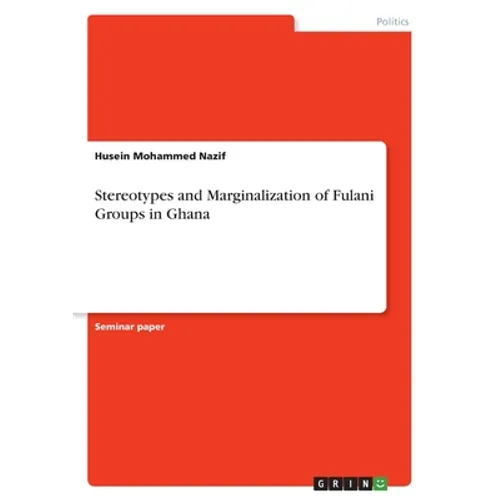
Stereotypes and Marginalization of Fulani Groups in Ghana - Paperback

$30.38 USD
$30.38 USD
Sale Sold out
Shipping calculated at checkout.
In stock (100 units), ready to be shipped

Available Offers

Fast delivery available on most orders

Multiple secure payment options accepted

Secure checkout with
  • American Express
  • Apple Pay
  • Diners Club
  • Discover
  • Google Pay
  • Mastercard
  • PayPal
  • Shop Pay
  • Visa

Flight Range: Up to 1,000 meters (3,280 feet)

Maximum Speed: 45 kilometers per hour (28 miles per hour)

For all orders exceeding a value of 100USD shipping is offered for free.

Returns will be accepted for up to 10 days of Customer’s receipt or tracking number on unworn items. You, as a Customer, are obliged to inform us via email before you return the item.

Otherwise, standard shipping charges apply. Check out our delivery Terms & Conditions for more details.

View Product Details
Shopping cart
Product Product subtotal Quantity Price Product subtotal
Stereotypes and Marginalization of Fulani Groups in Ghana - Paperback
$30.38/ea
$0.00
$30.38/ea $0.00

Product Description

by Husein Mohammed Nazif (Author)

Seminar paper in the subject Politics - Region: Africa, University for Development studies, language: English, abstract: Stereotypes and prejudices of Fulani pastoralists go beyond just discourses of examining the stereotypes and prejudices vis-à-vis the Fulani in Ghana, particularly the pastoral Fulani. This paper argues that these attitudes towards Fulani pastoralists in Ghana have become an important part of national and local community policies and discourses to help to exclude the pastoralists and to structure pastoralist community-relations. Over the years, there have been a significant coverage of issues relating to the Fulanis, however, most of that coverage has to do with the Fulani herdsmen. Part of it is largely due to the state policy of expulsion that poses the tendency of stereotypes, marginalization, and the practice of social exclusion. The relationship between the state and the Fulani pastoralists in Ghana, just like other countries in the West African sub-region is strained. National and local government officials generally consider nomadic pastoralism and the pastoral lifestyle to be an archaic form of production that is outdated.


Number of Pages: 26
Dimensions: 0.06 x 8.27 x 5.83 IN
Publication Date: November 04, 2022
you might like
