Skip to content
Welcome To Our Store.
100,000+ Products for Home, Medical, Office & Classroom Needs
Search
Skip to product information
1 of 1

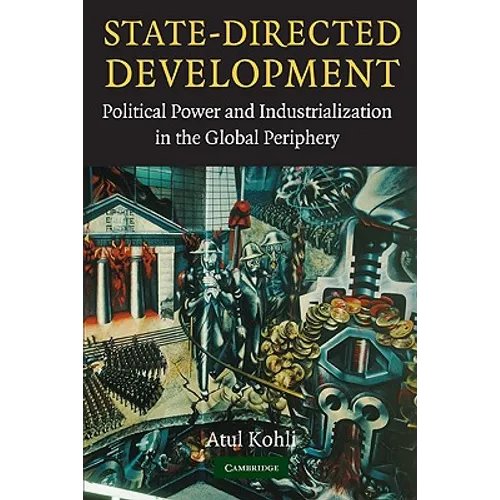
State-Directed Development: Political Power and Industrialization in the Global Periphery - Paperback

$67.32 USD
$67.32 USD
Sale Sold out
Shipping calculated at checkout.
In stock (100 units), ready to be shipped

Available Offers

Fast delivery available on most orders

Multiple secure payment options accepted

Secure checkout with
  • American Express
  • Apple Pay
  • Diners Club
  • Discover
  • Google Pay
  • Mastercard
  • PayPal
  • Shop Pay
  • Visa

Flight Range: Up to 1,000 meters (3,280 feet)

Maximum Speed: 45 kilometers per hour (28 miles per hour)

For all orders exceeding a value of 100USD shipping is offered for free.

Returns will be accepted for up to 10 days of Customer’s receipt or tracking number on unworn items. You, as a Customer, are obliged to inform us via email before you return the item.

Otherwise, standard shipping charges apply. Check out our delivery Terms & Conditions for more details.

View Product Details
Shopping cart
Product Product subtotal Quantity Price Product subtotal
State-Directed Development: Political Power and Industrialization in the Global Periphery - Paperback
$67.32/ea
$0.00
$67.32/ea $0.00

Product Description

by Atul Kohli (Author)

Why have some developing countries industrialized and become more prosperous rapidly while others have not? Focusing on South Korea, Brazil, India, and Nigeria, this study compares the characteristics of fairly functioning states and explains why states in some parts of the developing world are more effective. It emphasizes the role of colonialism in leaving behind more or less effective states, and the relationship of these states with business and labor in helping explain comparative success in promoting economic progress.

Number of Pages: 480
Dimensions: 1.3 x 8.7 x 6 IN
Illustrated: Yes
Publication Date: August 30, 2004
you might like