Skip to content
Save 5% on your next order with code PREMIUM5!
100,000+ Products for Home, Medical, Office & Classroom Needs
Search
Skip to product information
1 of 1

St. Albans - Paperback

$23.99 USD
$23.99 USD
Sale Sold out
Shipping calculated at checkout.

Available Offers

Fast delivery available on most orders

Multiple secure payment options accepted

Secure checkout with
  • American Express
  • Apple Pay
  • Diners Club
  • Discover
  • Google Pay
  • Mastercard
  • PayPal
  • Shop Pay
  • Visa

Flight Range: Up to 1,000 meters (3,280 feet)

Maximum Speed: 45 kilometers per hour (28 miles per hour)

For all orders exceeding a value of 100USD shipping is offered for free.

Returns will be accepted for up to 10 days of Customer’s receipt or tracking number on unworn items. You, as a Customer, are obliged to inform us via email before you return the item.

Otherwise, standard shipping charges apply. Check out our delivery Terms & Conditions for more details.

View Product Details
Shopping cart
Product Product subtotal Quantity Price Product subtotal
St. Albans - Paperback
$23.99/ea
$0.00
Sold out
$23.99/ea $0.00

Product Description

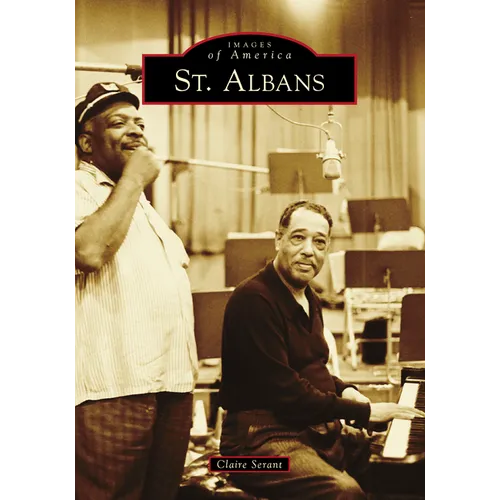
by Claire Serant (Author)

As colonial New Yorkers expanded their housing and employment options beyond Lower Manhattan and Brooklyn, southeast Queens became a destination for Dutch and English families who wanted more land and a better life.


Beyond the confines of the village of Jamaica in Queens emerged a community of strivers - farmers and entrepreneurs - who founded St. Albans in 1899. A housing boom in the 1920s and 1930s in Queens brought more residents with European heritage to St. Albans. Yankee slugger Babe Ruth spent so much time at the St. Albans Golf and Country Club that many area residents thought he lived there. Meanwhile, a racial covenant in Addisleigh Park, an affluent section of St. Albans, threatened to keep African Americans out of the neighborhood until the federal government outlawed the practice in 1948. Over time, many African American jazz musicians and entertainers along with middle- and working-class families have called St. Albans home. Today, St. Albans is a predominantly middle-class African American and Caribbean American neighborhood that continues to embrace its ambitious past through strong connections to business, civic, political, and religious groups.

Number of Pages: 128
Dimensions: 0.3 x 9.2 x 6.6 IN
Publication Date: January 27, 2020
you might like