Skip to content
Welcome To Our Store.
100,000+ Products for Home, Medical, Office & Classroom Needs
Search
Skip to product information
1 of 1

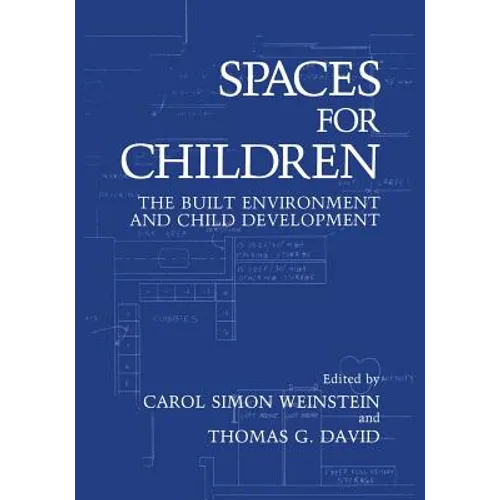
Spaces for Children: The Built Environment and Child Development - Paperback

$89.08 USD
$89.08 USD
Sale Sold out
Shipping calculated at checkout.
In stock (100 units), ready to be shipped

Available Offers

Fastest Delivery Tomorrow With Vip DealOrder within 1 hr 8 mins.

Instant 10% Discount On HDFC Banks Credit/Debit Cards EMI and CreditCard

Secure checkout with
  • American Express
  • Apple Pay
  • Diners Club
  • Discover
  • Google Pay
  • Mastercard
  • PayPal
  • Shop Pay
  • Visa

Flight Range: Up to 1,000 meters (3,280 feet)

Maximum Speed: 45 kilometers per hour (28 miles per hour)

For all orders exceeding a value of 100USD shipping is offered for free.

Returns will be accepted for up to 10 days of Customer’s receipt or tracking number on unworn items. You, as a Customer, are obliged to inform us via email before you return the item.

Otherwise, standard shipping charges apply. Check out our delivery Terms & Conditions for more details.

View Product Details
Shopping cart
Product Product subtotal Quantity Price Product subtotal
Spaces for Children: The Built Environment and Child Development - Paperback
$89.08/ea
$0.00
$89.08/ea $0.00

Product Description

by T. G. David (Editor), C. S. Weinstein (Editor)

As a developmental psychologist with a strong interest in children's re- sponse to the physical environment, I take particular pleasure in writing a foreword to the present volume. It provides impressive evidence of the con- cern that workers in environmental psychology and environmental design are displaying for the child as a user of the designed environment and indi- cates a recognition of the need to apply theory and findings from develop- mental and environmental psychology to the design of environments for children. This seems to me to mark a shift in focus and concern from the earlier days of the interaction between environmental designers and psy- chologists that occurred some two decades ago and provided the impetus for the establishment of environmental psychology as a subdiscipline. Whether because children-though they are consumers of designed environments- are not the architect's clients or because it seemed easier to work with adults who could be asked to make ratings of environmental spaces and comment on them at length, a focus on the child in interaction with en- vironments was comparatively slow in developing in the field of environ- ment and behavior. As the chapters of the present volume indicate, that situation is no longer true today, and this is a change that all concerned with the well-being and optimal functioning of children will welcome.


Number of Pages: 346
Dimensions: 0.74 x 10 x 7 IN
Publication Date: March 29, 2012
you might like
