Skip to content
Welcome To Our Store.
100,000+ Products for Home, Medical, Office & Classroom Needs
Search
Skip to product information
1 of 2

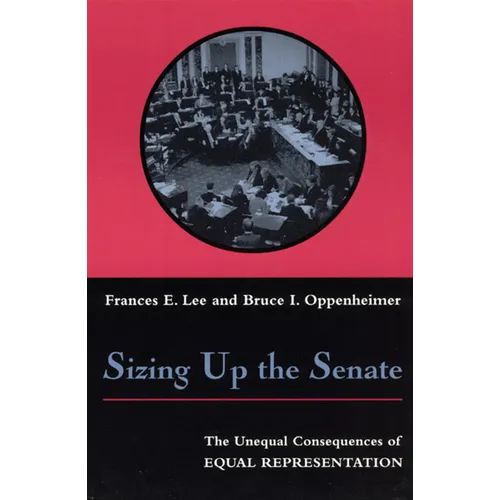
Sizing Up the Senate: The Unequal Consequences of Equal Representation - Paperback

$50.40 USD
$50.40 USD
Sale Sold out
Shipping calculated at checkout.
In stock (100 units), ready to be shipped

Available Offers

Fast delivery available on most orders

Multiple secure payment options accepted

Secure checkout with
  • American Express
  • Apple Pay
  • Diners Club
  • Discover
  • Google Pay
  • Mastercard
  • PayPal
  • Shop Pay
  • Visa

Flight Range: Up to 1,000 meters (3,280 feet)

Maximum Speed: 45 kilometers per hour (28 miles per hour)

For all orders exceeding a value of 100USD shipping is offered for free.

Returns will be accepted for up to 10 days of Customer’s receipt or tracking number on unworn items. You, as a Customer, are obliged to inform us via email before you return the item.

Otherwise, standard shipping charges apply. Check out our delivery Terms & Conditions for more details.

View Product Details
Shopping cart
Product Product subtotal Quantity Price Product subtotal
Sizing Up the Senate: The Unequal Consequences of Equal Representation - Paperback
$50.40/ea
$0.00
$50.40/ea $0.00

Product Description

by Frances E. Lee (Author)

We take it for granted that every state has two representatives in the United States Senate. Apply the "one person, one vote" standard, however, and the Senate is the most malapportioned legislature in the democratic world.

But does it matter that California's 32 million people have the same number of Senate votes as Wyoming's 480,000? Frances Lee and Bruce Oppenheimer systematically show that the Senate's unique apportionment scheme profoundly shapes legislation and representation. The size of a state's population affects the senator-constituent relationship, fund-raising and elections, strategic behavior within the Senate, and, ultimately, policy decisions. They also show that less populous states consistently receive more federal funding than states with more people. In sum, Lee and Oppenheimer reveal that Senate apportionment leaves no aspect of the institution untouched.

This groundbreaking book raises new questions about one of the key institutions of American government and will interest anyone concerned with issues of representation.
Number of Pages: 288
Dimensions: 0.73 x 8.96 x 6.09 IN
Illustrated: Yes
Publication Date: October 01, 1999
you might like