Product Description
by Takako Day (Author)
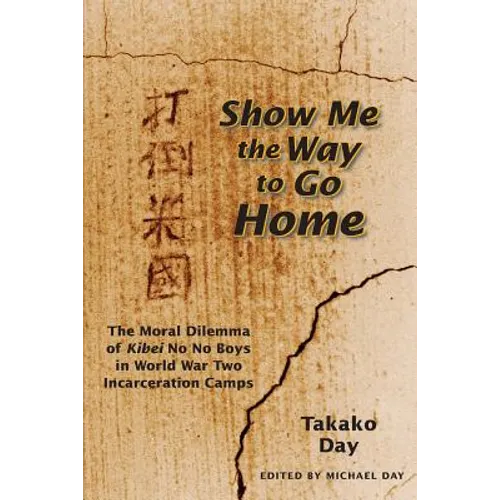
In 1995 Takako Day received a plea from a Japanese American who had been forcibly removed from his home and incarcerated during the Pacific War. He asked her to tell the painful story of American citizens who had been labeled "disloyal" by the US government. She interviewed more than ten "disloyal" men and discovered that at heart of their experience was a moral dilemma, buried deep in the Japanese American community: unlike many other English-speaking Japanese Americans, their mother tongue and the language of their education was the "enemy" language, Japanese. It is dedicated to making the untold stories of US citizens - imprisoned but asked to fight for the country that imprisoned them - accessible to readers of English.
Author Biography
Takako Day, originally from Kobe, Japan, is an award-winning freelance writer who has published six books and hundreds of articles in the Japanese language. In 1986, she moved to San Francisco, where she worked for the New York Yomiuri and the Nichibei Times, a San Francisco English/Japanese bilingual newspaper. She covered social and cultural issues in the Japanese and Asian American communities of the San Francisco Bay Area; this work culminated in her 1992 book, Challenge to America: Bicultural Women Bridging the Pacific (Tokyo: Akashi Shoten, 1992). In 1992 Day relocated to South Dakota, where she published Bananas and Apples: A Japanese Person's Experiences in South Dakota (Tokyo: Gogatsu Shobo, 1993) and began doing historical research. In addition to community service efforts, Day focused on Native American issues because of her interest in social and cultural issues on the nearby Pine Ridge Indian Reservation, then considered the poorest Indian reservation in the US. This research resulted in the publication of American Indians Today: Contemporary Oglala Lakota People Through a Woman's Eyes (Tokyo: Dai San Shokan, 1998). Soon after relocating to South Dakota, she visited Bismarck, North Dakota for a Native American powwow. That experience led her to conduct research on the history of Japanese Americans in internment and prison camps during World War II. Day's experience in the Dakotas and her interviews with Japanese Americans who had been interned at the Tule Lake Segregation Camp in California became a book titled I Cannot Shoot A Japanese Soldier: The Hidden History of the Japanese American Incarceration Experience (Tokyo: Fuyo Shobo Shuppan, 2000). In 1999, Day moved to Illinois, where for several years she wrote "From the Land of Lincoln," a column on Illinois history for the Chicago Shimpo newspaper and the Nichi Bei Times in San Francisco. Her love for Chicago brought forth the book Chicago and Illinois Off the Beaten Path (Tokyo: Kobunken, 2008). She also published a half-autobiographical account, Proof of Existence of a Tall Woman - If Cinderella Had Big Feet (Tokyo: Sairyusha, 2005), in which she traced the psychological background of discrimination against tall women in Japan. Day started a support group for tall women in Japan in 2006. Through her writing, based on her experiences in the U.S., she hopes to change Japanese society.