


Product Description
by Carol Batdorf (Author), Patricia Clark (Author)
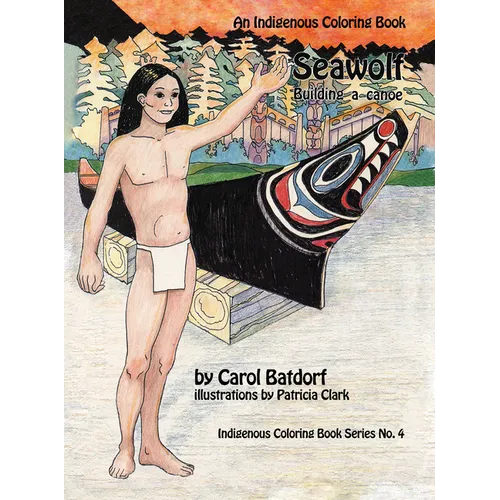
Canoes were important to the Indigenous people who lived long ago on the shores of the northwest coast. Wherever they went, they traveled by dugout canoes. This coloring book is about an Indigenous canoe and how it came to be. This is a coloring book for ages 5-12.
Back Jacket
Canoes were important to the Indigenous people who lived long ago on the shores of the northwest coast. Wherever they went, they traveled by dugout canoes. Some of their canoes could carry fifty and more people across open ocean water. others were small and were only used on quiet, sheltered bays. There were canoes made to be poled up rivers and those designed to carry huge loads of freight from place to place. There were light canoes made for women to use, fishing canoes, and even canoes for war. Only a carver who had the special skills, a "gift" the people called it, could carve a canoe from a cedar tree. Those men were honored for their work and were well paid with food, blankets, boxes or tools. It was considered a privilege for an Indigenous boy to be able to learn to make a canoe from such a carver. Koni, in our story, was such a boy. Once a canoe was carved and it proved to be a good craft, it was very valuable., The people respected it as if it were a living thing. They gave names to their canoes and took good care of them. This coloring book is about an Indigenous canoe and how it came to be. As you color the pictures, you will learn what it was like to be a First Peoples boy of long ago and how carvers transformed giant cedar logs into large, sturdy canoes. Since there is a lot of detail in the pictures, you might want to use felt pens or even colored pencils instead of crayons. Whatever you decide to use, most importantly, have fun!
Author Biography
Carol Batdorf has a long, close and caring association with the Coast Salish people. Apart from studying their culture, learning to carve totem poles and weave baskets, Carol has become Indian. She has served on the staff of the Lummi Communicatee Action program on the Lummi Reserve in Washington State and she has been an instructor in First Nations Studies at Western Washington University.