Product Description
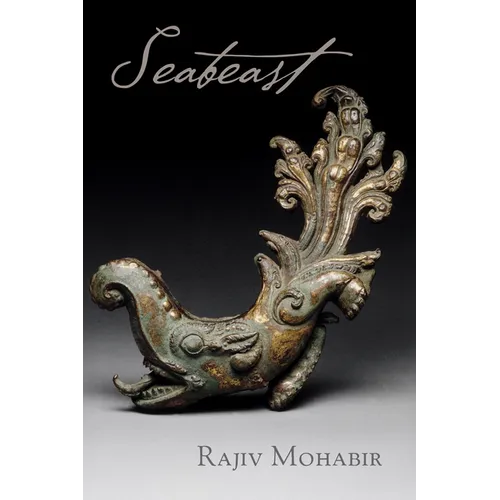
by Rajiv Mohabir (Author)
Organized as an alphabetical bestiary, Seabeast lyrically catalogues whale species by common name and behaviors, resulting in a poetic compendium that defies pathetic fallacy even as it sings the similarities between homo sapiens and the marine mammoths that have long captured our fascination. In his fifth full-length collection, Rajiv Mohabir winds together the threads of cetacean evolution, natural history, animal migration, and human culture and colonization as they concern the endurance of all species. In anthropomorphizing these complex mammals, Mohabir argues, we overwrite and erase their sublime difference and selfhood, their distinct and separate experience of embodiment; yet, in refusing to recognize the familiarities of whale behavior and social patterns, we subjugate these magnificent creatures, affirming a hierarchy that establishes anything inhuman as inherently less than human and enabling cruelty toward all manner of living things.
Mohabir's language ingeniously plumbs the depths, illustrating how the objectification fundamental to the construction and preservation of animal taxonomy mirrors the internecine violence of humankind on both a broad and intimate scale. "We were misnamed / again and again: first Hindu, / then Hindoo, then Indian, then / Coolie, all subhuman / much like this precursory cetacean / of the Eocene, named / in Latin great lizard-- / anguilliform, what to make / of twist and tear, teeth / gnashing sharks and durodons / into pulp, judged by fossilized / gouges in enamel and finger / holes on skulls?" Through the invention of race, the conquest and consumption of land, and the cultural amnesia enforced on the subaltern, imperialism threatens human survival on this planet just as we have misunderstood, taken captive, and hunted whales nearly to extinction. Meditating on the results of genetic testing, Mohabir details how, like his white ex-spouse's "ancestors / from northern Germany / played bone flutes / for their dead at gravesites," a lab "one day exhumed" them all "in perfect pentatonic scales." Meanwhile, he wonders what of his Indo-Caribbean heritage, complicated by the obfuscating forces of indenture, ethnic oppression, and frequent relocation, "can be revived" from this "wastebasket taxon, / us unnamed hoard of no future?" Of the Irrawaddy Dolphin once "known for / herding shoals of fish / for fisherfolk / in whose nets / they now drown," Mohabir observes that "learning human / language opens you // to betrayal." "Trust me," he urges, "though I am no // hairless dolphin-- / I once had a husband." Standing at the confluence of these prehistoric, mythological, and contemporary tributaries feeding our attitude toward whales, Mohabir asks, who is the seabeast, really? The namer or the named? The answer prompts us to see that, if we recognize the legacy of human barbarism in the whale's long history with us, we can also locate a new reserve of resilience and survival. It is their example Mohabir uses, not the "bright honey" of their blubber that once would "fuel lanterns," to power his own spiritual refortification. "Maybe I will, from filling my lungs, blood / rushing to my core, / into a finned thing, / transform."Author Biography
Poet, memoirist, and translator, Rajiv Mohabir is the author of five books of poetry and has been awarded two gold medals from the Foreword INDIES and Eric Hoffer Medal Provocateur. His other honors include being a finalist for the National Book Critics Circle Award, the PEN/America Open Book Award, the Lambda Literary Award, the Randy Shilts Award for Gay Nonfiction, and both second place and finalist for the Guyana Prize for Literature. His translations have won the Harold Morton Landon Translation Award from the Academy of American Poets. Currently he teaches poetry at the University of Colorado Boulder.