Product Description
by Loren Yellow Bird (Author), Michael Yellow Bird (Author), Logan Sutton (Author)
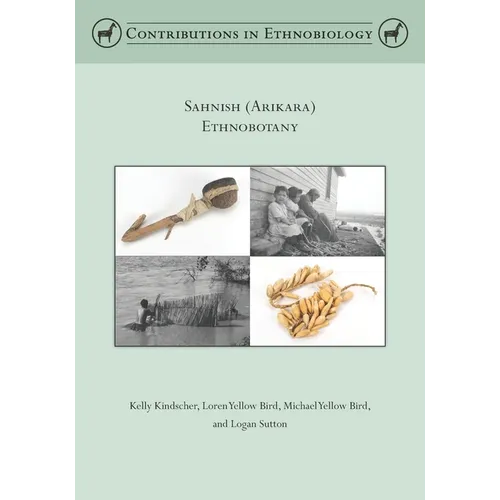
This book describes the traditional use of wild plants among the Arikara (Sahnish) for food, medicine, craft, and other uses. The Arikara grew corn, hunted and foraged, and traded with other tribes in the northern Great Plains. Their villages were located along the Missouri River in northern South Dakota and North Dakota. Today, many of them live at Fort Berthold Reservation, North Dakota, as part of the MHA (Mandan, Hidatsa, Arikara) Nation. We document the use of 106 species from 31 plant families, based primarily on the work of Melvin Gilmore, who recorded Arikara ethnobotany from 1916 to 1935. Gilmore interviewed elders for their stories and accounts of traditional plant use, collected material goods, and wrote a draft manuscript, but was not able to complete it due to debilitating illness. Fortunately, his field notes, manuscripts, and papers were archived and form the core of the present volume. Gilmore's detailed description is augmented here with historical accounts of the Arikara gleaned from the journals of Great Plains explorers-Lewis and Clark, John Bradbury, Pierre Tabeau, and others. Additional plant uses and nomenclature is based on the field notes of linguist Douglas R. Parks, who carried out detailed documentation of the tribe's language from 1970-2001. Although based on these historical sources, the present volume features updated modern botanical nomenclature, contemporary spelling and interpretation of Arikara plant names, and color photographs and range maps of each species. Kelly Kindscher collected and assembled the historical Gilmore materials; Logan Sutton contributed the Arikara spellings and linguistic analyses; and, Michael and Loren Yellow Bird-Arikara themselves-provided the cultural context. The work serves as an important regional ethnobotany of the Arikara Tribe, one of the most influential on the Northern Plains, and should be of great interest to ethnobotanists, ethnomedical practitioners, historians, and other Indigenous Peoples. More importantly, this book is for the Arikara people of all ages as documentation of, and reconnection to, their cultural heritage.