Skip to content
Welcome To Our Store.
100,000+ Products for Home, Medical, Office & Classroom Needs
Search
Skip to product information
1 of 1

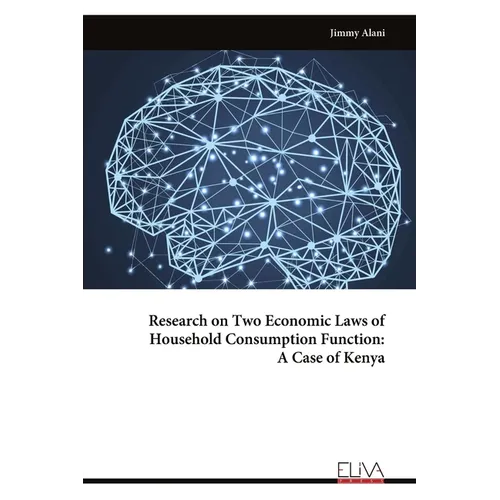
Research on Two Economic Laws of Household Consumption Function: A Case of Kenya - Paperback

$49.14 USD
$49.14 USD
Sale Sold out
Shipping calculated at checkout.
In stock (100 units), ready to be shipped

Available Offers

Fastest Delivery Tomorrow With Vip DealOrder within 1 hr 8 mins.

Instant 10% Discount On HDFC Banks Credit/Debit Cards EMI and CreditCard

Secure checkout with
  • American Express
  • Apple Pay
  • Diners Club
  • Discover
  • Google Pay
  • Mastercard
  • PayPal
  • Shop Pay
  • Visa
  • Daily deals
  • Return policy
  • Payment method
  • Help center 24/7

Flight Range: Up to 1,000 meters (3,280 feet)

Maximum Speed: 45 kilometers per hour (28 miles per hour)

For all orders exceeding a value of 100USD shipping is offered for free.

Returns will be accepted for up to 10 days of Customer’s receipt or tracking number on unworn items. You, as a Customer, are obliged to inform us via email before you return the item.

Otherwise, standard shipping charges apply. Check out our delivery Terms & Conditions for more details.

View Product Details
Shopping cart
Product Product subtotal Quantity Price Product subtotal
Research on Two Economic Laws of Household Consumption Function: A Case of Kenya - Paperback
$49.14/ea
$0.00
$49.14/ea $0.00

Product Description

by Jimmy Alani (Author)

The paper investigates two economic laws of household consumption over the 1960 to 2020 period by taking Kenya as a case study and using the generalized least (GLS) method. The two laws are: (a) The household marginal propensity to consume (MPC) in the short run is not significantly different from 0.43. (b) In the long run the household MPC is not significantly different from the positive square root of 0.43. These two laws fall within the campus of the Keynesian consumption function. Empirical findings from fifteen consumption models indicate that values of the long run MPC in Kenya during the aforementioned period were around 0.66; and were not significantly different from value of 0.65901. Meanwhile, in the short run the MPC in Kenya during the given period was 0.431; and was not significantly different from 0.4343. The findings could be due to the following facts: (a) The short run MPC is the product of average propensity to consume (APC) and long run MPC. (b) In the long run values of the respective APC and MPC tend to be equal to each other. The implication of the findings is that in the world, the MPC tends to move towards a common global equilibrium, for the simple reason that human beings often tend to have similar demands and consumption pattens.


Number of Pages: 78
Dimensions: 0.16 x 9 x 6 IN
Publication Date: January 22, 2024
you might like