


Product Description
by Carolyn T. Brown (Author)
This book is in the Cambria Sinophone World Series, headed by Victor Mair (University of Pennsylvania).
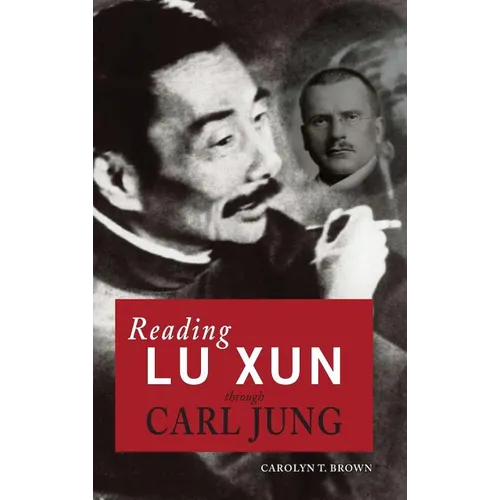
Lu Xun, a founder of modern Chinese literature, lived through a pivotal moment in Chinese history. He attributed his motivation for a career in literature to his desire to cure the spirits of the Chinese people. Given Lu Xun's explicit ambition to address China's historical crisis, scholars have addressed in great depth his contributions to Chinese intellectual and literary history and probed his short stories as expressions of his ambition to help solve China's crisis. He has been perceived as both an agent of change and an embodiment of his time. Yet generally scholars have not queried the psychological dimensions of his self-appointed task. If he imagined that curing spirits might even be possible, it would seem that he might have had at least an implicit psychological model of the disease, its causes, a process for healing it, and a vision of the cured state. Did he?
Scholars who study Lu Xun's modern short stories have usually focused on the content and used the stories to understand Lu Xun the writer or to sheds light on his times; they have attended to the structure only to the degree that it illuminates these concerns. This study executes a reversal, decentering the content and focusing on the structure as a primary means to understand the texts, and it seeks to understand the Lu Xun who presents himself through his work, not Lu Xun the full human being. The structure that emerges from a close reading of the stories does indeed present an implicit therapeutic model. Carl Jung's theories of the normative human self articulate with some precision Lu Xun's implicit vision of spiritual cure. Jung, one of three key founders of modern Western psychology, grounded his understanding of the human psyche in personal self-scrutiny and extensive clinical practice, and so his theories offer a validated psychological model for interpreting the textual evidence.
Reading Lu Xun Through Carl Jung thus deploys a new methodology and proposes a new model for interpreting Lu Xun's two collections of modern short stories. The study demonstrates that in fact Lu Xun had a clear but implicit model of spiritual healing and cure. He began with the assumption that this psycho-dynamic paradigm might apply in all arenas of Chinese life and so tested out this premise imaginatively through his stories. The conclusion embedded in his fiction is that in the domains of nation and community, healing would not be possible without revolutionary change, but that healing was possible, although hardly likely, within the confines of family and the self. Viewing the stories of Call to Arms and Wandering through this lens often yields important new insights about individual stories. Even when it does not, the approach draws attention to the commonalities disguised by the great variety of plots, characters, and narrative strategies. Further, this approach incorporates and generalizes the more limited way of viewing the stories in terms of class analysis, and it complements the historical and biographical discussion of these works. This book will appeal to scholars in Asian studies, comparative literature, and psychology.