Product Description
by Susan Craig (Author)
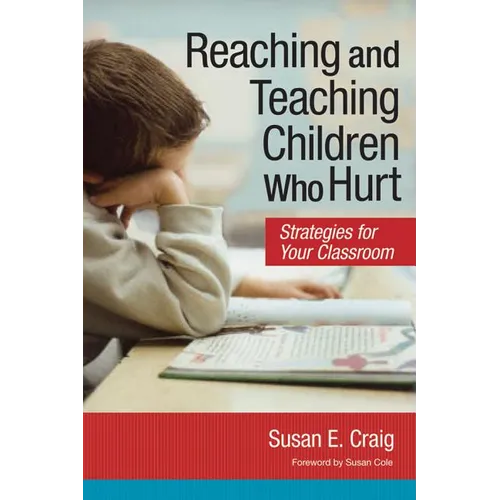
Each year hundreds of thousands of children in the United States experience trauma--such as abuse, neglect, or community violence--that creates tough obstacles to academic achievement and social success. Now there's a practical, strategy-filled book that shows educators how to reach and teach students exposed to trauma.
Through clear and readable explanations of current research and enlightening vignettes, educators will understand how violence and other forms of trauma affect the key elements of a child's school and social success, including behavior, attention, memory, and language. Then they'll find dozens of simple, creative ideas--easy to use in any classroom, on any budget--that show them how to
- adapt instruction to address the learning characteristics of children exposed to trauma
- help students develop the most important skills they need to succeed in school
- use positive behavior supports so children can stay calm and focused on learning
- build meaningful, appropriate, and supportive teacher-student relationships
- encourage positive peer relationships through cooperative games, group projects, and buddy systems
- provide predictable routines that instill a sense of safety and control
- avoid burnout and reduce the effects of compassion fatigue
- integrate a trauma-sensitive perspective across an entire school
Throughout the book, realistic sample scenarios demonstrate how teachers can make the strategies work in their classroom, and challenging What Would You Do? quizzes sharpen educators' instincts so they can respond skillfully in difficult situations. With this timely, much-needed guidebook, education professionals will create supportive classrooms and schools that meet the complex learning needs of children who hurt--and help the most vulnerable students build resilience and hope.
Author Biography
Susan E. Craig, Ph.D., has devoted her professional career to teaching both children and adults. Her interest in the relationship between family violence and learning began early. While working as a young reading specialist, she noted that many of the children she evaluated had a history of family violence. Her interest piqued, she pursued a doctorate at the University of New Hampshire, studying under Murray Straus, Ph.D., world renowned for his research on family violence. Dr. Craig's 1986 dissertation established a relationship between children's exposure to violence and subsequent learning problems in language, memory, impulsivity, self-differentiation, and executive function. These findings, published in Phi Delta Kappan in 1992, are now confirmed by magnetic resonance imaging (MRI) technology, which documents the relationship between violence and brain development.
Dr. Craig completed a postdoctoral fellowship at the University of Miami. Working with Miami's Children's Protective Services and the assessment team at Jackson Memorial Hospital, she conducted intellectual evaluations of children who had been maltreated.During this time, she completed a 30-year retrospective study of child homicide in Dade County, Florida, which was published in the Journal of Interpersonal Violence in 1989.
Working on site with many school districts throughout the country, Dr. Craig supports teaching and administrative staff in creating inclusive, trauma-sensitive schools. In 2001, the Rockland County New York Bureau of Children's Educational Support (BOCES) received the National School Board Association Magna Award. The honor was in recognition of a program that Dr. Craig helped develop.