


Product Description
by Gordon Roberts (Editor), L. P. Lewis (Author)
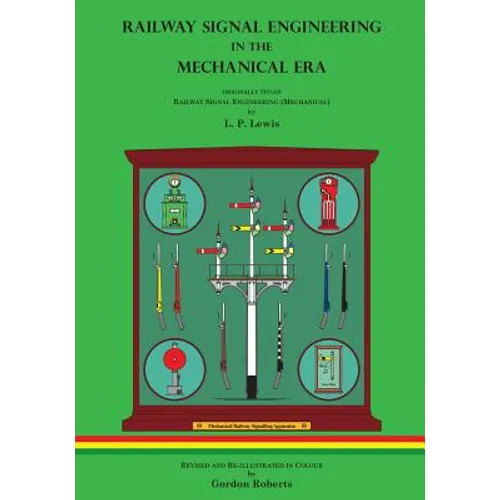
THIS standard treatise on mechanical railway signalling by Leonard Lewis was written at the turn of the twentieth century. Originally published in 1910 as Railway Signal Engineering (Mechanical), a second edition followed in 1912. A third edition, revised and enlarged by J. H. Fraser, appeared in 1932. Since its original publication, now more than 100 years ago, much if not all of the mechanisms and practices described and illustrated have disappeared from the modern high-speed railways of Britain and the rest of the world. In his preface to the first edition, Lewis wrote that he intended the book to be '... suitable for men who are engaged in railway work, but not necessarily in connection with the Signalling Engineer's Department.' Today, such men no longer have any professional interest in what to them is now archaic and superseded. However, with the popular growth of preserved heritage railways, and the dedicated reconstruction and re-creation of many railway artefacts by enthusiasts, it is no longer possible to state categorically that any particular mechanism or operating procedure described in the book is extinct. Although they may have disappeared from modern railways in the electronic and computer controlled age, original or replica items or otherwise obsolete methods of working may well be in regular use on preserved branch line railways or be on display in railway museums. Herein lies the main inspiration for this new edition at the start of the twenty first century. Lewis's book, once describing the very cutting edge of railway technology, has become with the passage of time a valuable work of history. Nevertheless, its contents may still be very relevant and of inestimable value to those responsible for the maintenance and operation of precious and irreplaceable signalling equipment on preserved steam and diesel railways, wheresoever those lines might be. Again, the ever growing band of collectors and restorers of old signalling equipment will find the technical material in these pages of more than passing interest. Likewise, enthusiasts viewing the artefacts on display in railway museums might find that this volume can usefully supplement the information provided in simplified guide books and explanatory leaflets.Railway Signal Engineering (Mechanical) is long out of print. The present derivative work is based on the 1932 edition and non of Lewis's original text, nor that later added by Fraser, has been omitted from this reprint. It is in every word as the original, except for a few minor corrections and one important detail. That is, the captions to some of the drawings have been amended to more accurately reflect the intent of the illustration, than did Lewis's original captions. Also note that no illustrations have been omitted, although a few have been added. However, as the most cursory glance through the book pages will show, all the illustrations have been redrawn, in many cases substituting more realistic depictions of signals and mechanisms for the sometimes rather crude sketches in the original. Most notably, colour has been used, not only to provide a more visually appealing book for the enthusiast and the historian, but also in the hope that it adds somewhat to the understanding of technical descriptions and of the illustrations themselves.



