


Product Description
by Jennifer M. Spear (Author)
Winner, 2009 Kemper and Leila Williams Prize in Louisiana History, The Historic New Orleans Collection and the Louisiana Historical Association
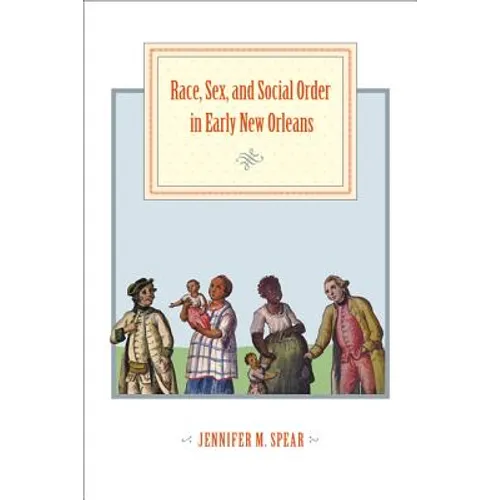
A microcosm of exaggerated societal extremes--poverty and wealth, vice and virtue, elitism and equality--New Orleans is a tangled web of race, cultural mores, and sexual identities. Jennifer M. Spear's examination of the dialectical relationship between politics and social practice unravels the city's construction of race during the eighteenth and early nineteenth centuries.
Spear brings together archival evidence from three different languages and the most recent and respected scholarship on racial formation and interracial sex to explain why free people of color became a significant population in the early days of New Orleans and to show how authorities attempted to use concepts of race and social hierarchy to impose order on a decidedly disorderly society. She recounts and analyzes the major conflicts that influenced New Orleanian culture: legal attempts to impose racial barriers and social order, political battles over propriety and freedom, and cultural clashes over place and progress. At each turn, Spear's narrative challenges the prevailing academic assumptions and supports her efforts to move exploration of racial formation away from cultural and political discourses and toward social histories.
Strikingly argued, richly researched, and methodologically sound, this wide-ranging look at how choices about sex triumphed over established class systems and artificial racial boundaries supplies a refreshing contribution to the history of early Louisiana.
Front Jacket
Winner, Kemper and Leila Williams Prize in Louisiana History, the Historic New Orleans Collection and the Louisiana Historical Association
A microcosm of exaggerated societal extremes--poverty and wealth, vice and virtue, elitism and equality--New Orleans is a tangled web of race, cultural mores, and sexual identities. Jennifer Spear's examination of the relationship between politics and social practice unravels the city's construction of race during the eighteenth and early nineteenth centuries. She brings together archival evidence from three different languages and scholarship on racial formation and interracial sex to explain why free people of color became a significant population in the early days of New Orleans and show how authorities attempted to use concepts of race and social hierarchy to impose order on a decidedly disorderly society.
A sophisticated navigation of the intersections of race, status, and sexuality and the permeability of each boundary.--Journal of Southern History
This thoroughly researched, extremely well-documented study gives us a clear understanding of how rulers constantly had to negotiate between what would ensure stability in the colony, what morality commanded, and what their perception of races suggested.--Journal of American History
An impressive study of the role played by race and sex in creating the familiar racial hierarchy of early New Orleans. Among Spear's many contributions is her detailed uncovering of the competing definitions of race as well as arguments about just what relationships between the various races should look like.--Journal of American Ethnic History
A wonderful survey of race relations in colonial Louisiana . . . Bringing things down to an individual level she manages to fuse the micro and macro, creating a layered portrait of colonial society. Her focus on women, their avenues for freedom, and the different responses to their prescribed social role make this interesting for scholars of the regulation of human sexuality, not just race history.--Itinerario
--Daniel Usner, Vanderbilt University "Itinerario"Back Jacket
Winner, Kemper and Leila Williams Prize in Louisiana History, the Historic New Orleans Collection and the Louisiana Historical Association
A microcosm of exaggerated societal extremes--poverty and wealth, vice and virtue, elitism and equality--New Orleans is a tangled web of race, cultural mores, and sexual identities. Jennifer Spear's examination of the relationship between politics and social practice unravels the city's construction of race during the eighteenth and early nineteenth centuries. She brings together archival evidence from three different languages and scholarship on racial formation and interracial sex to explain why free people of color became a significant population in the early days of New Orleans and show how authorities attempted to use concepts of race and social hierarchy to impose order on a decidedly disorderly society.
"A sophisticated navigation of the intersections of race, status, and sexuality and the permeability of each boundary."--Journal of Southern History
"This thoroughly researched, extremely well-documented study gives us a clear understanding of how rulers constantly had to negotiate between what would ensure stability in the colony, what morality commanded, and what their perception of races suggested."--Journal of American History
"An impressive study of the role played by race and sex in creating the familiar racial hierarchy of early New Orleans. Among Spear's many contributions is her detailed uncovering of the competing definitions of race as well as arguments about just what relationships between the various races should look like."--Journal of American Ethnic History
"A wonderful survey of race relations in colonial Louisiana . . . Bringing things down to an individual level she manages to fuse the micro and macro, creating a layered portrait of colonial society. Her focus on women, their avenues for freedom, and the different responses to their prescribed social role make this interesting for scholars of the regulation of human sexuality, not just race history."--Itinerario
Author Biography
Jennifer M. Spear is an associate professor of history at Simon Fraser University.



