Skip to content
Welcome To Our Store.
100,000+ Products for Home, Medical, Office & Classroom Needs
Search
Skip to product information
1 of 1

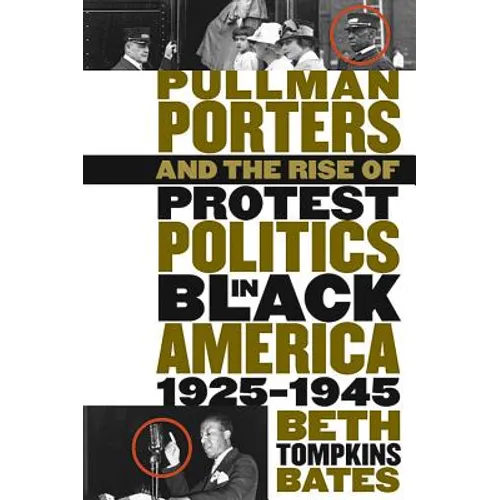
Pullman Porters and the Rise of Protest Politics in Black America, 1925-1945 - Paperback

$68.85 USD
$68.85 USD
Sale Sold out
Shipping calculated at checkout.
In stock (100 units), ready to be shipped

Available Offers

Fast delivery available on most orders

Multiple secure payment options accepted

Secure checkout with
  • American Express
  • Apple Pay
  • Diners Club
  • Discover
  • Google Pay
  • Mastercard
  • PayPal
  • Shop Pay
  • Visa

Flight Range: Up to 1,000 meters (3,280 feet)

Maximum Speed: 45 kilometers per hour (28 miles per hour)

For all orders exceeding a value of 100USD shipping is offered for free.

Returns will be accepted for up to 10 days of Customer’s receipt or tracking number on unworn items. You, as a Customer, are obliged to inform us via email before you return the item.

Otherwise, standard shipping charges apply. Check out our delivery Terms & Conditions for more details.

View Product Details
Shopping cart
Product Product subtotal Quantity Price Product subtotal
Pullman Porters and the Rise of Protest Politics in Black America, 1925-1945 - Paperback
$68.85/ea
$0.00
$68.85/ea $0.00

Product Description

by Beth Tompkins Bates (Author)

Between World War I and World War II, African Americans' quest for civil rights took on a more aggressive character as a new group of black activists challenged the politics of civility traditionally embraced by old-guard leaders in favor of a more forceful protest strategy. Beth Tompkins Bates traces the rise of this new protest politics--which was grounded in making demands and backing them up with collective action--by focusing on the struggle of the Brotherhood of Sleeping Car Porters (BSCP) to form a union in Chicago, headquarters of the Pullman Company.

Bates shows how the BSCP overcame initial opposition from most of Chicago's black leaders by linking its union message with the broader social movement for racial equality. As members of BSCP protest networks mobilized the black community around the quest for manhood rights and economic freedom, they broke down resistance to organized labor even as they expanded the boundaries of citizenship to include equal economic opportunity. By the mid-1930s, BSCP protest networks gained platforms at the national level, fusing Brotherhood activities first with those of the National Negro Congress and later with the March on Washington Movement. Lessons learned during this era guided the next generation of activists, who carried the black freedom struggle forward after World War II.


Number of Pages: 304
Dimensions: 0.72 x 9.22 x 6.12 IN
Publication Date: June 18, 2001
you might like
