Product Description
by Jose Luis Gonzalez (Author), Gerald Guinness (Translator)
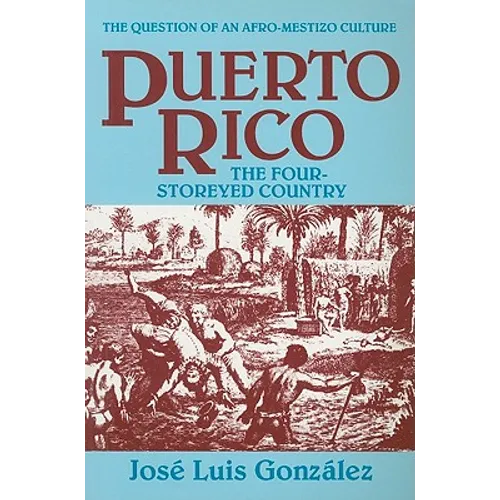
In this work, Gonz lez dismantles the myth of a dominant Spanish and racially white national culture in Puerto Rican history. He claims that the national identity is primarily Mestizo (mixed race) with a significant contribution from Africa. Gonz lez calls the African slaves and Mestizo peasantry the first Puerto Ricans because they were the first inhabitants who had to make the island their home. Having witnessed successful uprisings in neighboring Haiti, the Spanish authorities encouraged white immigrants to settle in Puerto Rico in an attempt to "whiten" the population, then thought to be tilting dangerously to the advantage of the Afro-Antilleans. These immigrants became the small but influential class of landowners and, later, urban professionals. According to the author's grand metaphor, Afro-Antilleans and Mestizos constitute the first "storey," or tier, of the "Puerto Rican house" of the title, landowners the second, urban professionals the third, and the managerial class the fourth.
Back Jacket
The publication of El pais de cuatro pisos (Spanish-language original version of this book) set off a frenzied debate on Puerto Rican society and cultures, now gaining in vehemence with the growing importance of Afro-American, Mestizo, and Caribbean cultures in the United States. Gonzalez dismantles the myth of a dominant Spanish and racially white national culture in Puerto Rican history. He claims that the national identity is primarily Mestizo with a significant contribution from Africa. Gonzalez calls the African slaves and Mestizo peasantry the first Puerto Ricans because they were the first inhabitants who had to make the island their home. Having witnessed successful uprisings in neighboring Haiti, the Spanish authorities encouraged white immigrants to settle in Puerto Rico in an attempt to "whiten" the population then thought to be tilting dangerously to the advantage of the Afro-Antilleans. These immigrants became the small but influential class of landowners and, later, urban professionals. Afro-Antilleans and Mestizos constitute the first "storey", or tier, of the "Puerto Rican house" of the title story, landowners the second, urban professionals the third, and managerial class the fourth. Gonzalez argues that a national culture must be seen and defined as something rising "from below" rather than imposed by a white minority "from above", and that Puerto Ricans must acknowledge that their culture is primarily Caribbean rather than either North American or Hispanic.