Product Description
by Phil Glover (Author)
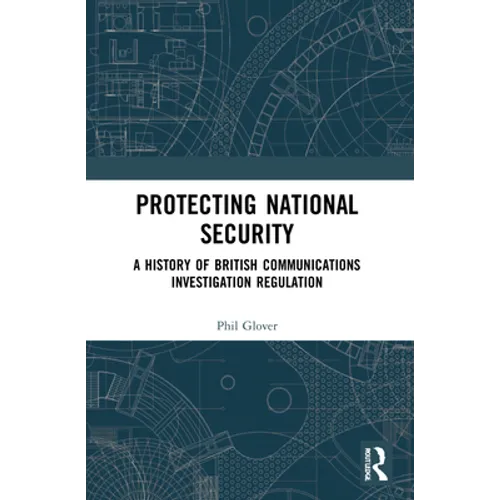
This book contends that modern concerns surrounding the UK State's investigation of communications (and, more recently, data), whether at rest or in transit, are in fact nothing new. It evidences how, whether using common law, the Royal Prerogative, or statutes to provide a lawful basis for a state practice traceable to at least 1324, the underlying policy rationale has always been that first publicly articulated in Cromwell's initial Postage Act 1657, namely the protection of British 'national security', broadly construed. It further illustrates how developments in communications technology led to Executive assumptions of relevant investigatory powers, administered in conditions of relative secrecy. In demonstrating the key role played throughout history by communications service providers, the book also charts how the evolution of the UK Intelligence Community, entry into the 'UKUSA' communications intelligence-sharing agreement 1946, and intelligence community advocacy all significantly influenced the era of arguably disingenuous statutory governance of communications investigation between 1984 and 2016.
The book illustrates how the 2013 'Intelligence Shock' triggered by publication of Edward Snowden's unauthorized disclosures impelled a transition from Executive secrecy and statutory disingenuousness to a more consultative, candid Executive and a policy of 'transparent secrecy', now reflected in the Investigatory Powers Act 2016. What the book ultimately demonstrates is that this latest comprehensive statute, whilst welcome for its candour, represents only the latest manifestation of the British state's policy of ensuring protection of national security by granting powers enabling investigative access to communications and data, in transit or at rest, irrespective of location.
Author Biography
Phil Glover was born and raised near Belfast, Northern Ireland. Having left school without qualifications, he served in the Royal Ulster Constabulary between 1983 and 2002. He returned to higher education in Scotland in 2008 and obtained an LLB (Honours) from the University of Aberdeen in 2012. He completed a PhD at the University of Aberdeen in 2015 before commencing a career in academia. He now teaches criminal law and conducts comparative national security-related research at Curtin University Law School, Perth, Western Australia.