Skip to content
Welcome To Our Store.
100,000+ Products for Home, Medical, Office & Classroom Needs
Search
Skip to product information
1 of 1

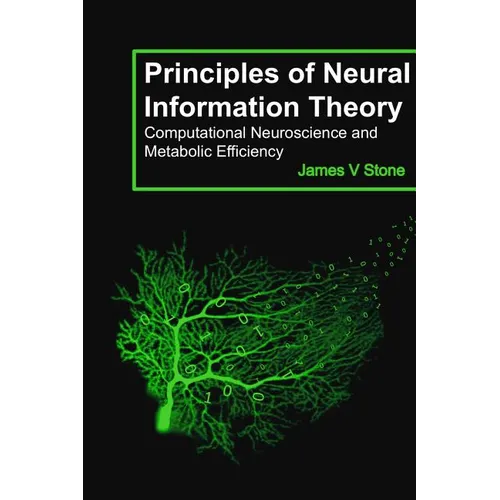
Principles of Neural Information Theory: Computational Neuroscience and Metabolic Efficiency - Paperback

$37.75 USD
$37.75 USD
Sale Sold out
Shipping calculated at checkout.
In stock (100 units), ready to be shipped

Available Offers

Fast delivery available on most orders

Multiple secure payment options accepted

Secure checkout with
  • American Express
  • Apple Pay
  • Diners Club
  • Discover
  • Google Pay
  • Mastercard
  • PayPal
  • Shop Pay
  • Visa

Flight Range: Up to 1,000 meters (3,280 feet)

Maximum Speed: 45 kilometers per hour (28 miles per hour)

For all orders exceeding a value of 100USD shipping is offered for free.

Returns will be accepted for up to 10 days of Customer’s receipt or tracking number on unworn items. You, as a Customer, are obliged to inform us via email before you return the item.

Otherwise, standard shipping charges apply. Check out our delivery Terms & Conditions for more details.

View Product Details
Shopping cart
Product Product subtotal Quantity Price Product subtotal
Principles of Neural Information Theory: Computational Neuroscience and Metabolic Efficiency - Paperback
$37.75/ea
$0.00
$37.75/ea $0.00

Product Description

by James V. Stone (Author)

The brain is the most complex computational machine known to science, even though its components (neurons) are slow and unreliable compared to a laptop computer. In this richly illustrated book, Shannon's mathematical theory of information is used to explore the metabolic efficiency of neurons, with special reference to visual perception. Evidence from a diverse range of research papers is used to show how information theory defines absolute limits on neural efficiency; limits which ultimately determine the neuroanatomical microstructure of the eye and brain. Written in an informal style, with a comprehensive glossary, tutorial appendices, explainer boxes, and a list of annotated Further Readings, this book is an ideal introduction to cutting-edge research in neural information theory.

Number of Pages: 214
Dimensions: 0.45 x 9 x 6 IN
Illustrated: Yes
Publication Date: June 05, 2018
you might like