


Product Description
by Jeff Leigh (Editor)
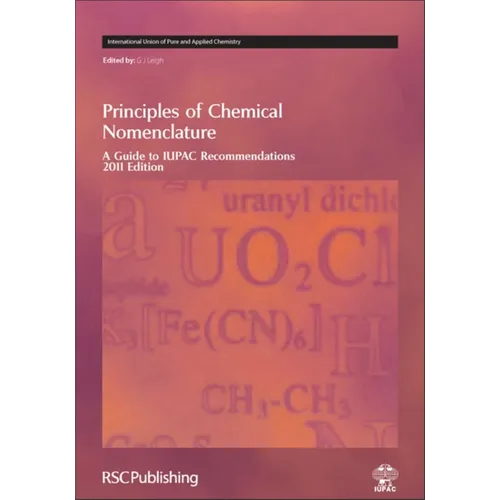
The ultimate aim of IUPAC nomenclature is to provide unequivocal and comprehensible names for all kinds of chemical structures. This requires a rational basis from which comprehensible names can be developed. Written by leading world authorities this second edition of Principles of Chemical Nomenclature outlines IUPAC recommendations for application in the principle branches of chemistry: organic, inorganic, organometallic, and polymer. It also includes some basic biochemical nomenclature. The book clearly explains the fundamental principles of nomenclature methods and enables the reader to apply them accurately and with confidence. New developments are described and additional nomenclature systems used in specific industries are introduced. The book is replete with examples for guidance and there are extensive tables to direct the reader to information quickly. Aimed at chemistry teachers and students at all levels, it advises on the best presentation of formulae and chemical graphics. Although rather advanced for school pupils, their teachers will find it useful.
Back Jacket
Precise and accurate nomenclature is a vital aspect of chemistry. IUPAC nomenclature provides unequivocal names for all kinds of chemical structures. This requires a rational basis from which comprehensible names can be developed. Written by leading world authorities, Principles of Chemical Nomenclature enables teachers and students to obtain a sound training in IUPAC nomenclature. It outlines IUPAC recommendations for application in the principle branches of chemistry: organic, inorganic, organometallic, and polymer. It also includes some basic biochemical nomenclature. The book clearly explains the fundamental principles of nomenclature methods and enables the reader to apply them accurately and with confidence. The book is replete with examples for guidance and there are extensive tables to direct the reader to information quickly. The new edition takes a slightly different approach to the original. Discussions of other nomenclatures used in specific industries have been added. These include the IUPAC International Chemical Identifier (InChI) and the Preferred IUPAC Names (PINs). Nomenclature, just like chemistry, is a subject that develops continually. New classes of compound require new adaptations of nomenclature and IUPAC tries to provide these. The changes in IUPAC recommendations since publication of the first edition have been incorporated. This expansion of coverage required additional expertise so the writing of the new edition has been divided amongst a group of specialist writers. Aimed at chemistry teachers and students at all levels, this book advises on the best presentation of formulae and chemical graphics. Although rather advanced for school pupils, their teachers will find it useful.
Author Biography
G.J. Leigh is Emeritus Professor at the University of Sussex and has been active in IUPAC nomenclature since 1973.



