Skip to content
Welcome To Our Store.
100,000+ Products for Home, Medical, Office & Classroom Needs
Search
Skip to product information
1 of 1

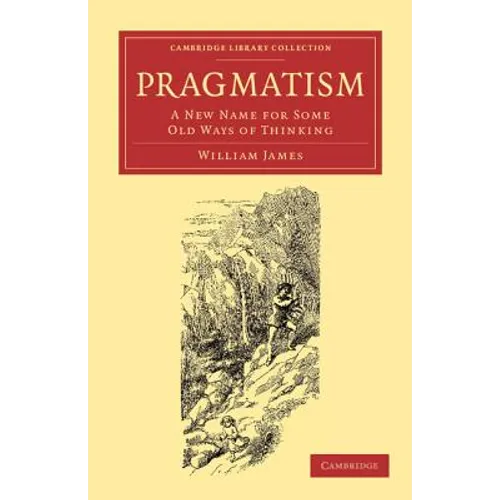
Pragmatism: A New Name for Some Old Ways of Thinking - Paperback

$94.05 USD
$94.05 USD
Sale Sold out
Shipping calculated at checkout.
In stock (100 units), ready to be shipped

Available Offers

Fastest Delivery Tomorrow With Vip DealOrder within 1 hr 8 mins.

Instant 10% Discount On HDFC Banks Credit/Debit Cards EMI and CreditCard

Secure checkout with
  • American Express
  • Apple Pay
  • Diners Club
  • Discover
  • Google Pay
  • Mastercard
  • PayPal
  • Shop Pay
  • Visa
  • Daily deals
  • Return policy
  • Payment method
  • Help center 24/7

Flight Range: Up to 1,000 meters (3,280 feet)

Maximum Speed: 45 kilometers per hour (28 miles per hour)

For all orders exceeding a value of 100USD shipping is offered for free.

Returns will be accepted for up to 10 days of Customer’s receipt or tracking number on unworn items. You, as a Customer, are obliged to inform us via email before you return the item.

Otherwise, standard shipping charges apply. Check out our delivery Terms & Conditions for more details.

View Product Details
Shopping cart
Product Product subtotal Quantity Price Product subtotal
Pragmatism: A New Name for Some Old Ways of Thinking - Paperback
$94.05/ea
$0.00
$94.05/ea $0.00

Product Description

by William James (Author)

One of the great American pragmatic philosophers alongside Peirce and Dewey, William James (1842-1910) delivered these eight lectures in Boston and New York in the winter of 1906-7. Though he credits Peirce with coining the term 'pragmatism', James highlights in his subtitle that this 'new name' describes a philosophical temperament as old as Socrates. The pragmatic approach, he says, takes a middle way between rationalism's airy principles and empiricism's hard facts. James' pragmatism is both a method of interpreting ideas by their practical consequences and an epistemology which identifies truths according to their useful outcomes. Furnished with many examples, the lectures illustrate pragmatism's response to classic problems such as the question of free will versus determinism. Published in 1907, this work further develops James's approach to religion and morality, introduced in The Will to Believe (1897) and The Varieties of Religious Experience (1902), both reissued in this series.


Number of Pages: 330
Dimensions: 0.74 x 8.5 x 5.5 IN
Publication Date: March 20, 2014
you might like