Skip to content
Welcome To Our Store.
100,000+ Products for Home, Medical, Office & Classroom Needs
Search
Skip to product information
1 of 1

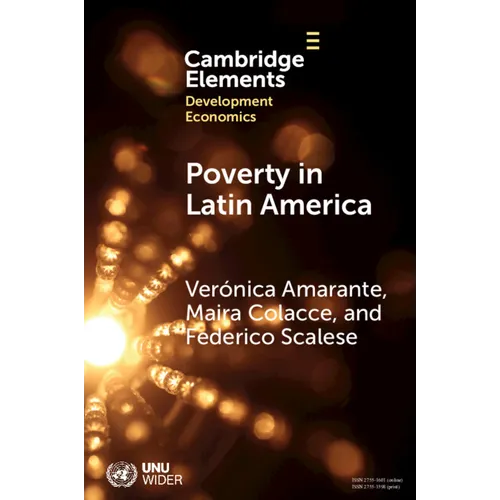
Poverty in Latin America - Paperback

$38.25 USD
$38.25 USD
Sale Sold out
Shipping calculated at checkout.
In stock (100 units), ready to be shipped

Available Offers

Fastest Delivery Tomorrow With Vip DealOrder within 1 hr 8 mins.

Instant 10% Discount On HDFC Banks Credit/Debit Cards EMI and CreditCard

Secure checkout with
  • American Express
  • Apple Pay
  • Diners Club
  • Discover
  • Google Pay
  • Mastercard
  • PayPal
  • Shop Pay
  • Visa
  • Daily deals
  • Return policy
  • Payment method
  • Help center 24/7

Flight Range: Up to 1,000 meters (3,280 feet)

Maximum Speed: 45 kilometers per hour (28 miles per hour)

For all orders exceeding a value of 100USD shipping is offered for free.

Returns will be accepted for up to 10 days of Customer’s receipt or tracking number on unworn items. You, as a Customer, are obliged to inform us via email before you return the item.

Otherwise, standard shipping charges apply. Check out our delivery Terms & Conditions for more details.

View Product Details
Shopping cart
Product Product subtotal Quantity Price Product subtotal
Poverty in Latin America - Paperback
$38.25/ea
$0.00
$38.25/ea $0.00

Product Description

by Verónica Amarante (Author), Maira Colacce (Author), Federico Scalese (Author)

This Element derives subjective poverty lines for seven Latin American countries based on a Minimum Income Question included in household expenditure surveys. It compares poverty incidence under the subjective and objective approach, finding subjective poverty is larger than objective for all countries. People identified as poor are generally poor by both measures or only subjective poor, although patterns of overlapping differ between countries. It explores the factors associated to considering oneself as poor - being subjectively poor- when the per capita household income is higher than the objective poverty line. Generally, unemployment and informality are associated with higher probability of subjective poverty. Other factors not directly involving income but reflecting high economic security also tend to reduce the probability of feeling poor. Finally, the welfare stigma effect does not seem to hold, at least in terms of subjective poverty. This title is also available as Open Access on Cambridge Core.

Number of Pages: 94
Dimensions: 0.2 x 9 x 6 IN
Publication Date: June 12, 2025
you might like