


Product Description
by Judy Rosenthal (Author)
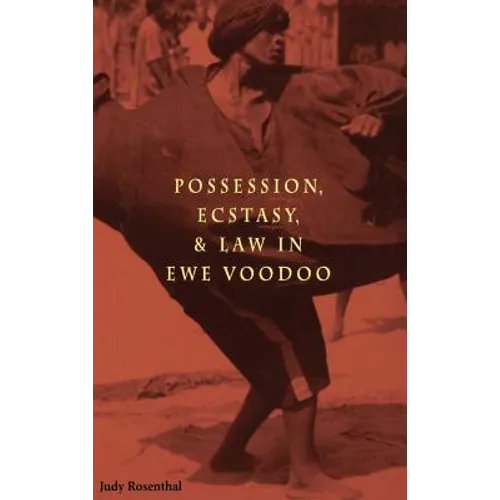
As a new resident of Togo in 1985, Judy Rosenthal witnessed her first Gorovodu trance ritual. Over the next eleven years, she studied this voodoo in West Africa's Ewe populations of coastal Ghana, Togo, and Benin, an area once called the Slave Coast. The result is Possession, Ecstasy, and Law in Ewe Voodoo, an ethnography of spirit possession that focuses on law and morality in "medecine Vodu" orders. Gorovodu is not a doctrinal set, but rather a lingusitic, moral, and spiritual community, with both real and imagined aspects.
In medecine Vodu possession, the deities evoked are spirits of "bought people" from the savanna regions, slaves who worked for southern coastal lineages, often marrying into Ewe families. Drumming and dancing rituals, replete with voluptuous trances and gender reversals, bring these "foreign" spirits back into Ewe communities to protect worshippers, heal the sick and troubled, arbitrate disputes, and enjoy themselves as they did before they died. (Rosenthal employs Bakhtin's theory of carnival to interpret the openly festive element of Gorovodu.) The changeable nature of the religion echoes the lack of boundaries of the Gorovodu family and the residents' belief that communal and individual identity are fluid rather than fixed. Numerous name changes early in this century indicated a strategy for resisting colonial control.
Writing from a background of anthropology, Rosenthal carefully monitors her own role as narrator in the book, aware of the cultural distance between her and the Africans she is writing about. She intends this ethnography to mirror the "texts" of voodoo itself, a body of signifiers and meanings with which the reader must interact in order to make sense of it.
Author Biography
Judy Rosenthal is Assistant Professor of Anthropology at the University of Michigan--Flint.