Skip to content
Save 5% on your next order with code PREMIUM5!
100,000+ Products for Home, Medical, Office & Classroom Needs
Search
Skip to product information
1 of 1

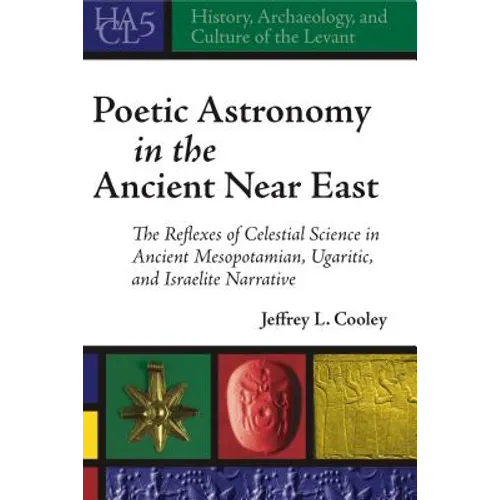
Poetic Astronomy in the Ancient Near East: The Reflexes of Celestial Science in Ancient Mesopotamian, Ugaritic, and Israelite Narrative - Hardcover

$111.51 USD
$111.51 USD
Sale Sold out
Shipping calculated at checkout.
In stock (100 units), ready to be shipped

Available Offers

Fast delivery available on most orders

Multiple secure payment options accepted

Secure checkout with
  • American Express
  • Apple Pay
  • Diners Club
  • Discover
  • Google Pay
  • Mastercard
  • PayPal
  • Shop Pay
  • Visa

Flight Range: Up to 1,000 meters (3,280 feet)

Maximum Speed: 45 kilometers per hour (28 miles per hour)

For all orders exceeding a value of 100USD shipping is offered for free.

Returns will be accepted for up to 10 days of Customer’s receipt or tracking number on unworn items. You, as a Customer, are obliged to inform us via email before you return the item.

Otherwise, standard shipping charges apply. Check out our delivery Terms & Conditions for more details.

View Product Details
Shopping cart
Product Product subtotal Quantity Price Product subtotal
Poetic Astronomy in the Ancient Near East: The Reflexes of Celestial Science in Ancient Mesopotamian, Ugaritic, and Israelite Narrative - Hardcover
$111.51/ea
$0.00
$111.51/ea $0.00

Product Description

by Jeffrey L. Cooley (Author)

Modern science historians have typically treated the sciences of the ancient Near East as separate from historical and cultural considerations. At the same time, biblical scholars, dominated by theological concerns, have historically understood the Israelite god as separate from the natural world. Cooley's study, bringing to bear contemporary models of science history on the one hand and biblical studies on the other hand, seeks to bridge a gap created by 20th-century scholarship in our understanding of ancient Near Eastern cultures by investigating the ways in which ancient authors incorporated their cultures' celestial speculation in narrative.

In the literature of ancient Iraq, celestial divination is displayed quite prominently in important works such as Enuma Elis and Erra and Isum. In ancient Ugarit as well, the sky was observed for devotional reasons, and astral deities play important roles in stories such as the Baal Cycle and Shahar and Shalim. Even though the veneration of astral deities was rejected by biblical authors, in the literature of ancient Israel the Sun, Moon, and stars are often depicted as active, conscious agents. In texts such as Genesis 1, Joshua 10, Judges 5, and Job 38, these celestial characters, these "sons of God," are living, dynamic members of Yahweh's royal entourage, willfully performing courtly, martial, and calendrical roles for their sovereign.

The synthesis offered by this book, the first of its kind since the demise of the pan-Babylonianist school more than a century ago, is about ancient science in ancient Near Eastern literature.


Number of Pages: 408
Dimensions: 1.3 x 9.2 x 6.4 IN
Publication Date: March 19, 2013
you might like
