


Product Description
by Scott Kaufman (Author)
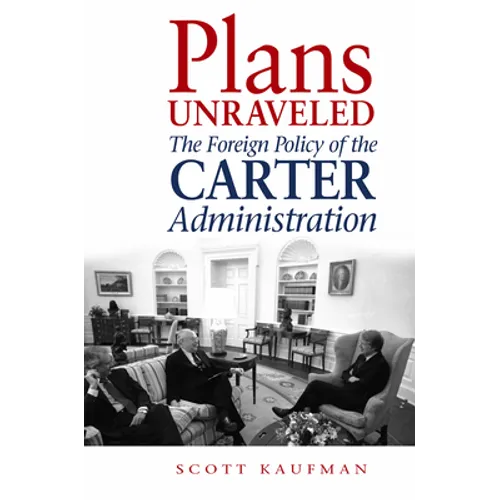
During the past decade, the literature on the Carter administration's foreign policy has grown rapidly, due largely to both the release of new materials at the presidential library and the attention Jimmy Carter has received since leaving the White House. While previous monographs have focused on specific foreign policy issues, Scott Kaufman breaks away from the mold and offers this up-to-date, comprehensive look at Carter's aggregate foreign policy record. Although many Americans regard Jimmy Carter as the nation's greatest ex-president, Kaufman argues that the diplomatic performance of the thirty-ninth president was mediocre, primarily because of Carter's own doing.
Carter, who entered office at a time of transition, was determined to shift the direction of U.S. foreign policy in a way that would downplay conflict between the superpowers; to give more emphasis to North-South issues; and generally to make the world a better place by curbing repression, reducing arms sales, halting nuclear proliferation, ending political and military conflicts abroad, and strengthening the world economy. But, as crises developed abroad, the president gradually assumed a diplomatic stance similar to that of his predecessors, and ultimately his foreign policy boiled down to containing the Soviet threat.
Kaufman admits that Carter, like all presidents, faced limitations in what he wanted to achieve, including lawmakers or foreign officials who did not see eye-to-eye with him. Despite difficulties, the president did have some success: he achieved ratification of the Panama Canal treaties, normalized relations with China, convinced Israel and Egypt to sign the Camp David Accords and a peace agreement, and made human rights a permanent component of U.S. diplomacy. Nonetheless, Kaufman concludes that Carter's style of leadership caused his failures to far outnumber his successes: Carter viewed himself as a political outsider, attempted to achieve too much at once, failed to prioritize initiatives or to understand the complexities involved in achieving them, poorly handled intra-administration disputes, and failed to give the nation a vision of the state in which he wanted to leave the country by the end of his administration.
Author Biography
Scott Kaufman, Associate Professor of History at Francis Marion University, has authored four books and co-authored with his father, Burton Kaufman, the second edition of The Presidency of James Earl Carter, Jr.



