


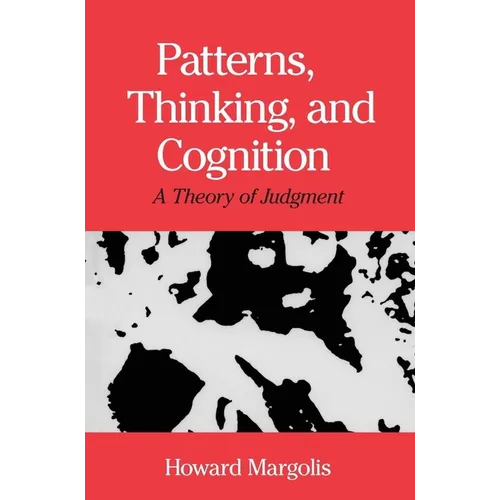
Product Description
by Howard Margolis (Author)
What happens when we think? How do people make judgments? While different theories abound--and are heatedly debated--most are based on an algorithmic model of how the brain works. Howard Margolis builds a fascinating case for a theory that thinking is based on recognizing patterns and that this process is intrinsically a-logical. Margolis gives a Darwinian account of how pattern recognition evolved to reach human cognitive abilities.
Illusions of judgment--standard anomalies where people consistently misjudge or misperceive what is logically implied or really present--are often used in cognitive science to explore the workings of the cognitive process. The explanations given for these anomalous results have generally explained only the anomaly under study and nothing more. Margolis provides a provocative and systematic analysis of these illusions, which explains why such anomalies exist and recur. Offering empirical applications of his theory, Margolis turns to historical cases to show how an individual's cognitive repertoire--the available cognitive patterns and their relation to cues--changes or resists changes over time. Here he focuses on the change in worldview occasioned by the Copernican discovery: not only how an individual might come to see things in a radically new way, but how it is possible for that new view to spread and become the dominant one. A reanalysis of the trial of Galileo focuses on social cognition and its interactions with politics. In challenging the prevailing paradigm for understanding how the human mind works, Patterns, Thinking, and Cognition is certain to stimulate fruitful debate.Back Jacket
A fascinating case for a theory that thinking is based on recognizing patterns and that this process is intrinsically a-logical. Margolis gives a Darwinian account of how pattern recognition evolved to reach human cognitive abilities.
Author Biography
Howard Margolis is senior lecturer in the Graduate School of Public Policy Studies at the University of Chicago.