Product Description
by United Nations (Author), World Bank (Author)
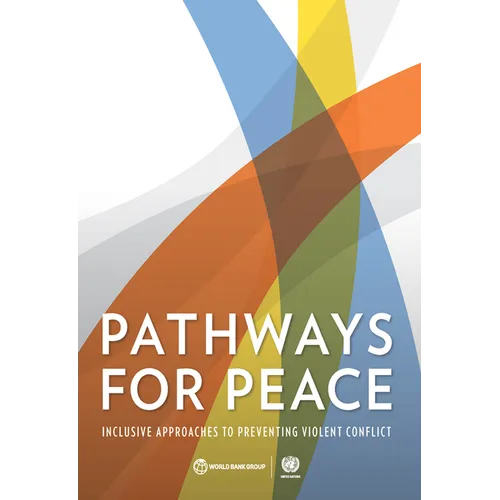
Violent conflicts today are complex and increasingly protracted, involving more nonstate groups and regional and international actors. It is estimated that by 2030--the horizon set by the international community for achieving the Sustainable Development Goals--more than half of the world's poor will be living in countries affected by high levels of violence. Information and communication technology, population movements, and climate change are also creating shared risks that must be managed at both national and international levels. Pathways for Peace is a joint United Nations-World Bank Group study that originates from the conviction that the international community's attention must urgently be refocused on prevention. A scaled-up system for preventive action would save between US$5 billion and US$70 billion per year, which could be reinvested in reducing poverty and improving the well-being of populations. The study aims to improve the way in which domestic development processes interact with security, diplomacy, mediation, and other efforts to prevent conflicts from becoming violent. It stresses the importance of grievances related to exclusion--from access to power, natural resources, security and justice, for example--that are at the root of many violent conflicts today. Based on a review of cases in which prevention has been successful, the study makes recommendations for countries facing emerging risks of violent conflict as well as for the international community. Development policies and programs must be a core part of preventive efforts; when risks are high or building up, inclusive solutions through dialogue, adapted macroeconomic policies, institutional reform, and redistributive policies are required. Inclusion is key, and preventive action needs to adopt a more people-centered approach that includes mainstreaming citizen engagement. Enhancing the participation of women and youth in decision making is fundamental to sustaining peace, as well as long-term policies to address the aspirations of women and young people.
Author Biography
The World Bank came into formal existence in 1945 following the international ratification of the Bretton Woods agreements. It is a vital source of financial and technical assistance to developing countries around the world. The organization's activities are focused on education, health, agriculture and rural development, environmental protection, establishing and enforcing regulations, infrastructure development, governance and legal institutions development. The World Bank is made up of two unique development institutions owned by its 185 Member Countries. The International Bank for Reconstruction and Development (IBRD) focuses on middle income and creditworthy poor countries and the International Development Association (IDA), which focuses on the poorest countries in the world.