Skip to content
Welcome To Our Store.
100,000+ Products for Home, Medical, Office & Classroom Needs
Search
Skip to product information
1 of 1

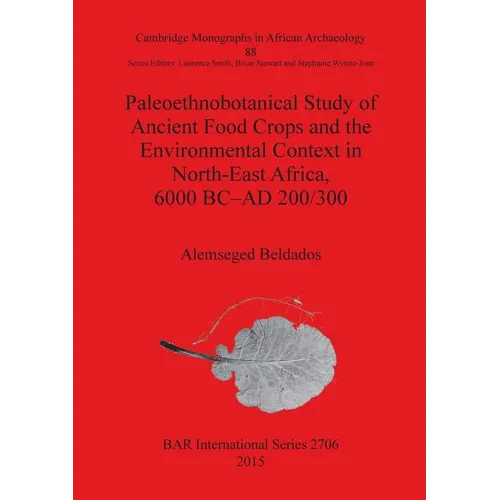
Paleoethnobotanical Study of Ancient Food Crops and the Environmental Context in North-East Africa, 6000 BC-AD 200/300 - Paperback

$72.00 USD
$72.00 USD
Sale Sold out
Shipping calculated at checkout.
In stock (100 units), ready to be shipped

Available Offers

Fastest Delivery Tomorrow With Vip DealOrder within 1 hr 8 mins.

Instant 10% Discount On HDFC Banks Credit/Debit Cards EMI and CreditCard

Secure checkout with
  • American Express
  • Apple Pay
  • Diners Club
  • Discover
  • Google Pay
  • Mastercard
  • PayPal
  • Shop Pay
  • Visa
  • Daily deals
  • Return policy
  • Payment method
  • Help center 24/7

Flight Range: Up to 1,000 meters (3,280 feet)

Maximum Speed: 45 kilometers per hour (28 miles per hour)

For all orders exceeding a value of 100USD shipping is offered for free.

Returns will be accepted for up to 10 days of Customer’s receipt or tracking number on unworn items. You, as a Customer, are obliged to inform us via email before you return the item.

Otherwise, standard shipping charges apply. Check out our delivery Terms & Conditions for more details.

View Product Details
Shopping cart
Product Product subtotal Quantity Price Product subtotal
Paleoethnobotanical Study of Ancient Food Crops and the Environmental Context in North-East Africa, 6000 BC-AD 200/300 - Paperback
$72.00/ea
$0.00
$72.00/ea $0.00

Product Description

by Alemseged Beldados (Author)

Archaeobotanical investigation was conducted on a total of thirty two thousand (n=32,000) pot fragments, baked clay and fired clay collected from different sites belonging to five Cultural Groups in Eastern Sudan. The Cultural Groups include Amm Adam, Butana, Gash, Jebel Mokram, and Hagiz. Soil samples (6 kilos) were also analyzed from various excavation spots at Mahal Teglinos, a major site that rendered data on Butana, Gash, Jebel Mokram and Hagiz Groups. The objective of the study was to reconstruct ancient food systems of the pre-historic inhabitants of a region of Northeast Africa and its environmental milieu. The result of the study demonstrated the subsistence bases of the inhabitants from ca. 6,000 B.C. to 200/300 A.D. Crops like the small seededmillets (Setaria sp., Eleusine sp., Paspalum sp., Echinochloa sp., Pennisetum sp.), Sorghum verticilliflorum, Sorghum bicolor bicolor, Hordeum sp., Triticum monococcum/dicoccum, and seeds and fruit stones (Vigna unguiculata, Grewia bicolor Juss., Ziziphus sp. (mainly Ziziphus spina christi) and Celtis integrifolia) were cultivated for consumption during this period. The study has also shed new light on the domestication history of Sorghum bicolor. The wild Sorghum, Sorghum bicolor verticilliflorum and its cultivated variety, Sorghum bicolor were simultaneously exploited by the Jebel Mokram Group people between 2,000 B.C. and 1,000 B.C. One of the oldest domesticated morphotype of Sorghum bicolor, i.e. an intermediary phase between the wild progenitor and its domesticated variety was revealed by the same investigation. Morphological change that has occurred while the species was evolving from wild to cultivated is measured using a Leica Qwin software.

Number of Pages: 102
Dimensions: 0.29 x 11.69 x 8.27 IN
Illustrated: Yes
Publication Date: March 28, 2015
you might like